

Out-of-the-box Salesforce works well for basic CRM needs. But the moment your sales process has a unique approval chain, your service team needs custom case routing, or your marketing requires integration with a niche tool, the standard configuration hits its limits.
Organizations that invest in the benefits of Salesforce development unlock capabilities that generic CRM setups cannot deliver.
This blog explains what Salesforce development involves and the key benefits it delivers. You will also get a peek into how organizations across industries use custom development to drive measurable business outcomes.
Key Takeaways
- Tailored workflows: Custom objects, validation rules, and approval processes make Salesforce conform to your business rather than forcing adaptation to platform limitations.
- Workflow automation: Triggers, flows, and scheduled jobs eliminate manual tasks across sales, service, and marketing, ensuring consistent execution at scale.
- Advanced analytics: Custom dashboards and report types surface the metrics that drive decisions, giving leadership visibility into pipeline health, forecasts, and KPIs.
- Seamless integrations: API connections link Salesforce to ERP, accounting, marketing, and contact center systems, eliminating data silos and duplicate entry.
- Personalized experience: Unified customer views, segmentation, and journey automation deliver consistent engagement that builds loyalty.
- Platform extensibility: AppExchange apps, Lightning components, and modular Apex code create a foundation that scales with business growth.
What is Salesforce Development?
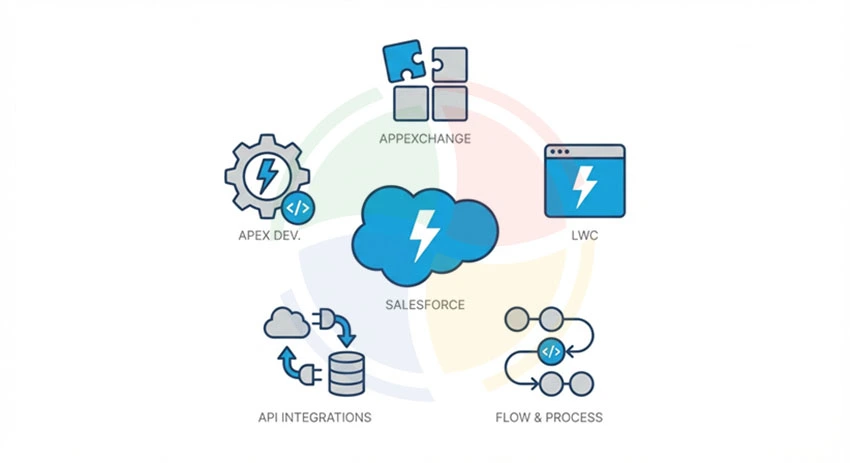
Salesforce development refers to the process of building custom functionality on the Salesforce platform beyond standard configuration. While Salesforce provides extensive point-and-click tools for basic customization, development extends these capabilities through code, custom components, and platform-level integrations.
Development work on Salesforce typically falls into several categories:
- Apex development for custom business logic, triggers, and backend processing that cannot be achieved through declarative tools
- Lightning Web Components for custom user interfaces that match specific workflow requirements
- Flow and Process Builder extensions that combine declarative automation with custom code where needed
- API integrations that connect Salesforce to ERP systems, marketing platforms, billing tools, and other enterprise applications
- AppExchange app customization that extends third-party packages to fit organizational requirements
6 Key Benefits of Salesforce Development for Your Business
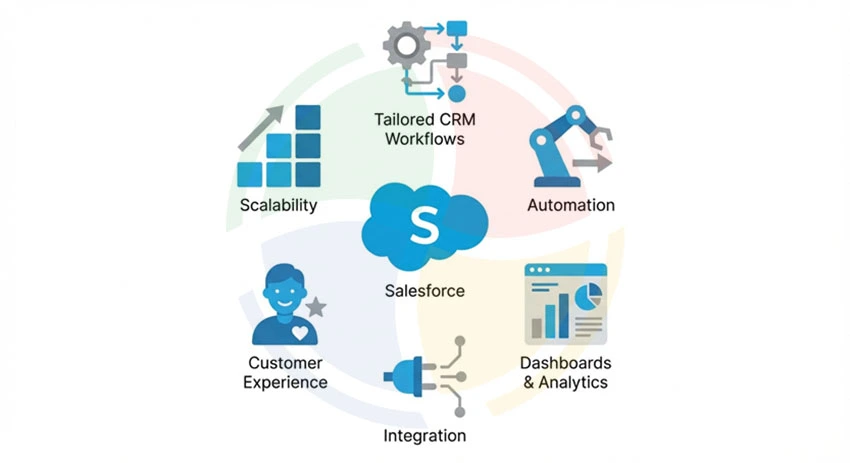
The benefits of Salesforce development span operational efficiency, data visibility, customer experience, and long-term platform value. Each benefit compounds over time as custom functionality becomes embedded in daily workflows.
1. Custom CRM Workflows for Unique Business Processes
Every organization has processes that differ from industry standards. For example, sales cycles can vary by deal size, and approval chains must reflect organizational hierarchy. Standard CRM configurations rarely accommodate these nuances without compromise.
Tailored CRM development addresses this gap through:
- Custom objects model business entities that Salesforce does not include by default, such as dealer networks, project deliverables, or subscription tiers
- Validation rules enforce data quality at the point of entry, preventing downstream issues in reporting and integrations
- Custom approval workflows route records through the correct stakeholders based on deal value, region, product line, or any other criteria
- Page layouts and record types present different interfaces to different teams, showing each user the fields and actions relevant to their role
2. Automation of Sales, Service, and Marketing Tasks
Manual work drains productivity and introduces errors, while pulling focus from high-value work. Salesforce workflow automation eliminates manual steps through triggers, flows, scheduled jobs, and platform events:
- Salesforce lead assignment rules route new leads to the right sales rep based on territory, industry, or lead score without manual intervention
- Case escalation flows automatically elevate support tickets that breach SLA thresholds, notifying managers and reassigning ownership
- Opportunity stage automation updates related records, sends notifications, and creates follow-up tasks when deals progress
- Email sequences triggered by customer behavior deliver personalized content without marketing team involvement
The result is improving sales processes with Salesforce through consistent execution. AI CRM automation ensures that every lead gets followed up on, every case gets escalated on time, and every opportunity moves through the pipeline with appropriate oversight.
3. Better Visibility Through Advanced Dashboards and Analytics
Standard Salesforce reports answer basic questions, but leadership teams need deeper insight. Which regions are underperforming? Where do deals stall in the pipeline? Which marketing campaigns drive actual revenue?
These questions require custom data analytics.
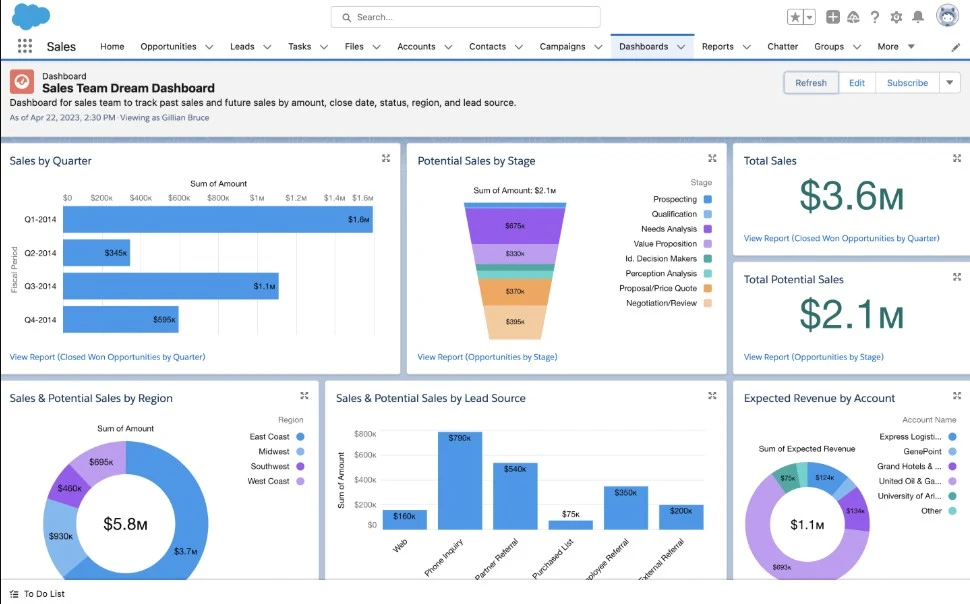
via Salesforce
Custom development enables advanced reporting capabilities:
- Dynamic dashboards that filter automatically based on the viewing user’s role, region, or team membership
- Custom report types that join data across objects in ways that standard reports do not support
- Embedded analytics that surface key metrics directly on record pages where users make decisions
- Forecasting models that incorporate historical patterns, seasonality, and pipeline velocity
With this, pipeline health becomes visible at a glance, sales managers spot stalled deals before they become losses, and executives can track KPIs without requesting manual reports. The entire organization operates from a shared understanding of current performance.
4. Improved Integration With Third-Party Systems
Salesforce rarely operates in isolation. Organizations run ERP systems for inventory and fulfillment, accounting platforms for invoicing, marketing tools for campaign management, and contact center software for customer support. Data silos between these systems create inefficiency and inconsistency.
Salesforce development enables seamless integration across the technology stack:
- Real-time API integrations sync customer data between Salesforce and ERP systems, ensuring that sales teams see accurate inventory and fulfillment status
- Middleware connections link Salesforce to accounting platforms, automating invoice creation when opportunities close
- Marketing platform integrations pass lead engagement data into Salesforce, enriching lead records with campaign interaction history
- Contact center integrations surface customer context to agents, displaying recent purchases, open cases, and account history during calls. Once the call begins, leveraging automated ai meeting transcription allows the system to instantly log the conversation details back into Salesforce, saving agents from tedious manual note-taking.
5. Improved Customer Experience and Personalization
Customers expect companies to know their history, preferences, and context. They grow frustrated when they repeat information across channels or receive irrelevant communications. Delivering a personalized experience at scale requires unified customer data and automated journey orchestration.
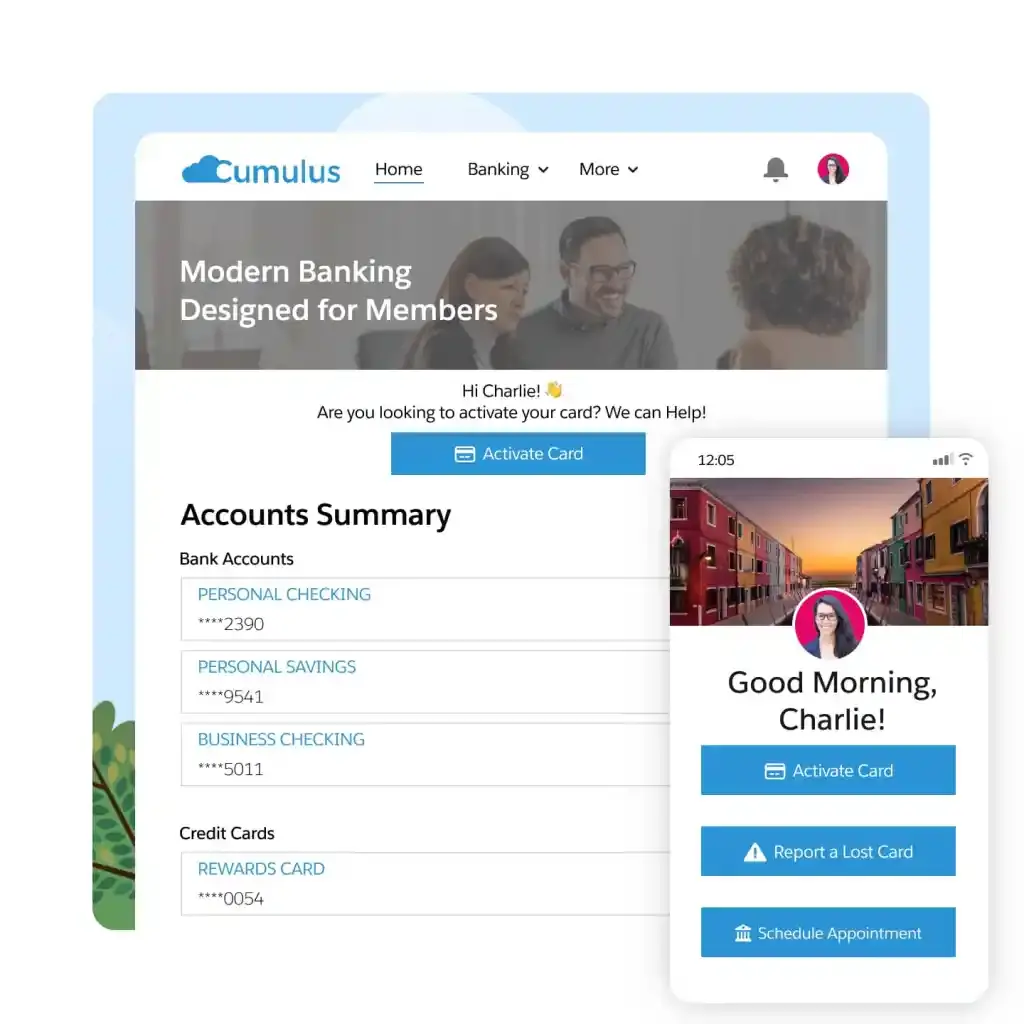
via Salesforce
Salesforce development enables personalization capabilities that the standard configuration cannot match:
- Single customer view consolidates data from sales, service, and marketing into a unified profile that any team member can access
- Segmentation logic groups customers based on behavior, value, lifecycle stage, or custom attributes for targeted engagement
- Journey automation triggers personalized communications based on customer actions, delivering the right message at the right moment
- Self-service portals built on Experience Cloud give customers direct access to their account information, order history, and support cases
The result is consistent, personalized engagement that builds loyalty and increases lifetime value. Customers feel known and valued across every interaction.
6. Scalability and Platform Extensibility
Business requirements evolve as companies enter new markets, launch new products, acquire competitors, and restructure operations. AI CRM systems must adapt to these changes without requiring complete rebuilds.
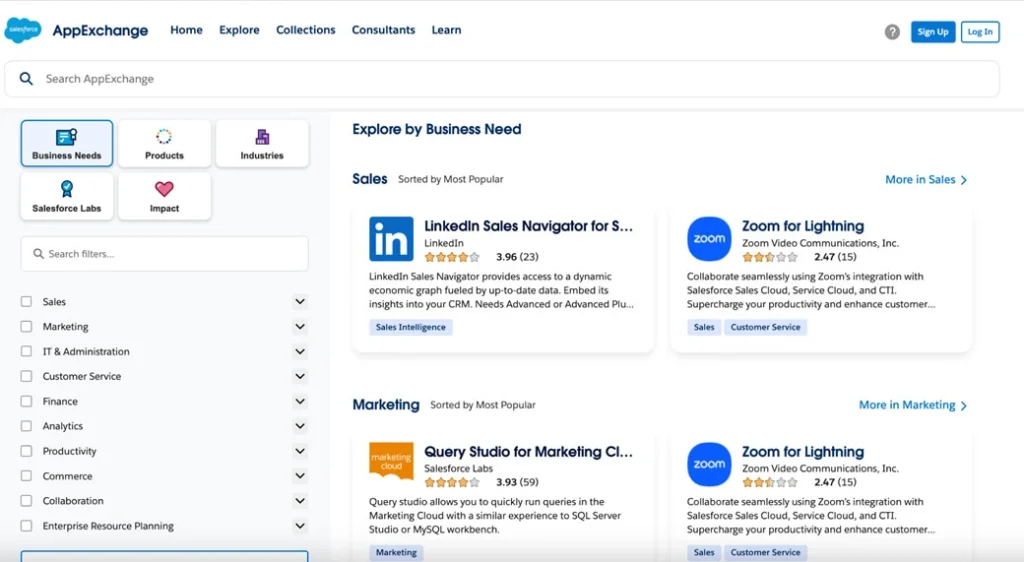
Salesforce scalability and flexibility come from the platform’s extensible architecture:
- AppExchange apps extend functionality without custom development, providing pre-built solutions for common needs like document generation, e-signature, and territory management
- Lightning components create reusable interface elements that can be deployed across multiple objects and applications
- Apex classes encapsulate business logic in modular, testable code that can evolve as requirements change
- Platform APIs expose Salesforce data and functionality to external systems, enabling integrations that grow with the business
Salesforce platform extensibility means that investments in development compound over time. Custom components built for one use case can be extended for others. Integrations designed for current systems can accommodate future additions. The platform grows with the organization.
How Customization Adds Value to Your Processes
The benefits of custom Salesforce development become concrete when applied to specific operational challenges. Generic CRM implementations force teams to work around platform limitations.
Manufacturing: Dealer Portal and Service Management
Manufacturing companies often sell through dealer networks and need visibility into channel performance. Custom dealer portals built on Salesforce Experience Cloud give dealers self-service access to inventory, pricing, and order status while providing manufacturers with pipeline visibility they previously lacked.
Service management customization tracks equipment installations, warranty coverage, and maintenance schedules. Field service teams receive automated work orders with customer history and equipment specifications, reducing time on site and improving first-time fix rates.
Financial Services: Compliance Workflows and Client Onboarding
Financial services organizations face strict compliance requirements that standard CRM workflows cannot enforce. Additionally, Custom development embeds compliance checks into every stage of client interaction, from KYC verification during onboarding to suitability assessments before product recommendations.
Client onboarding workflows collect required documentation, route applications through compliance review, and trigger account provisioning in downstream systems. What previously took weeks of manual coordination completes in days with full audit trails.
Healthcare: Patient Engagement and Care Coordination
Healthcare organizations use Salesforce Health Cloud to manage patient relationships, but standard functionality rarely matches specific care models. Custom development extends the platform to support care team coordination, patient outreach campaigns, and integration with electronic health records.
Automated appointment reminders reduce no-show rates, while care gap identification flags patients overdue for preventive services. Plus, referral management tracks patients across provider networks, ensuring continuity of care.
SaaS: Subscription Billing and Churn Prediction
SaaS companies need CRM functionality that standard Salesforce does not provide: subscription management, usage tracking, renewal forecasting, and churn prediction. Custom development integrates billing platforms with Salesforce, giving account teams visibility into subscription health.
Churn prediction models analyze usage patterns, support ticket volume, and engagement metrics to identify at-risk accounts before they cancel. Customer success teams receive automated alerts with recommended actions, enabling proactive retention efforts.
How Aegis Softtech Supports Salesforce Development and Customization
We partner with organizations to design, build, and optimize Salesforce solutions that deliver measurable business value. Our team combines technical expertise with industry knowledge to create implementations that align with how teams work.
Our Salesforce practice covers the full engagement lifecycle:
- Discovery and solution design that maps current workflows, identifies automation opportunities, and focuses development efforts on the highest-impact areas
- Custom development using Apex, Lightning Web Components, and platform APIs with full adherence to Salesforce best practices and governor limit optimization
- Integration work that connects Salesforce to ERP systems, marketing platforms, and enterprise applications using REST, SOAP, and middleware solutions
- Implementation and training that includes change management support, documentation, and knowledge transfer to internal teams
- Ongoing support that ensures organizations capture value from platform updates and adapt implementations to evolving business needs
Contact Aegis Softtech to discuss how custom development can drive measurable results for your organization.
FAQs
1. How does Salesforce benefit in the future?
Salesforce continues to invest in AI capabilities through Einstein, industry-specific cloud solutions, and platform enhancements that expand what organizations can build. Future benefits include deeper automation through AI-powered insights, enhanced integration capabilities, and improved developer tools that accelerate custom development.
2. How many data types are there in Salesforce?
Salesforce supports numerous field data types for storing different kinds of information.
Common types include Text, Number, Currency, Date, DateTime, Picklist, Multi-Select Picklist, Checkbox, Email, Phone, URL, Percent, Lookup, and Master-Detail relationships. Custom formula fields and roll-up summary fields provide calculated values based on other data.
3. What are the key components of Salesforce?
The key components include Sales Cloud for opportunity and pipeline management, Service Cloud for case management and customer support, Marketing Cloud for campaign automation, Experience Cloud for portals and communities, and the core Lightning Platform that provides the development framework.
Additional components like Einstein Analytics, Flow Builder, and AppExchange extend functionality across all clouds.
