
What happens when multiple enterprise projects move forward at the same time, but teams lack a single place to track progress, resources, and dependencies?
Project managers frequently coordinate tasks across spreadsheets, emails, and disconnected tools.
As projects scale, this fragmentation makes it harder to track milestones, manage resources, and maintain visibility across teams.
ServiceNow project management addresses this challenge by bringing project planning, execution, and tracking into a unified platform.
In this guide, we will discuss how ServiceNow project management works, the capabilities it offers, and how it supports the complete project lifecycle in enterprise environments.
Key Takeaways
Platform overview: ServiceNow project management helps organizations plan, execute, and track projects within a unified enterprise platform.
Project lifecycle support: The module supports the full lifecycle—initiation, planning, execution, monitoring, and closure—with tools for task tracking, milestone management, and project reporting.
Core module capabilities: Key components include project workspaces, planning tools, task management, resource allocation, financial tracking, and real-time dashboards.
Agile and hybrid delivery: The platform supports Agile practices such as sprint planning, backlog management, and iterative delivery while maintaining governance for enterprise projects.
Portfolio alignment: Project management integrates with Strategic Portfolio Management (SPM), allowing organizations to connect individual projects with broader business priorities.
Enterprise collaboration: Teams can coordinate tasks, track risks and issues, and collaborate within a centralized project environment.
What is ServiceNow Project Management?
ServiceNow project management is a platform capability that enables organizations to manage the full project lifecycle—from initiation and planning through execution, monitoring, and closure. As a ServiceNow project management tool, it provides tools for defining project tasks, assigning resources, tracking milestones, and monitoring delivery progress.
Within the platform, you can create project records, organize tasks, define timelines, and maintain visibility into dependencies and deliverables. It helps teams follow defined project processes while maintaining accountability across stakeholders.
Why Enterprises Need a Unified Project Management Platform
Enterprise projects involve multiple teams, shared resources, and tightly coordinated timelines. As the number of initiatives grows, maintaining visibility across tasks, milestones, and responsibilities becomes increasingly difficult.
In many organizations, project activities are still managed across spreadsheets, email threads, and separate project tools. When information is scattered across systems, you struggle to maintain a clear view of project progress and resource allocation.
This creates several operational challenges, such as:
- Disconnected project tools that store information in separate systems
- Limited visibility into resource allocation across teams and projects
- Inconsistent project processes between departments
- Difficulty tracking project progress when multiple teams contribute to the same initiative
- Delays in project delivery caused by missed dependencies or communication gaps
ServiceNow project management centralizes your project activities into a single operational environment. Project planning, execution, and reporting remain connected throughout the delivery process.
Key Components of the ServiceNow Project Management Module
The module includes core components that support project planning, execution, and oversight.
Below are the core components that support project management within ServiceNow:
Project Workspace
The project workspace is the central area where you manage project records, timelines, tasks, and updates. It provides a consolidated view of project status, helping you quickly understand progress, dependencies, and outstanding work.
Project Planning Tools
Planning tools help you define project scope, timelines, and milestones. You can organize project phases, structure deliverables, and map task dependencies to maintain a clear execution plan.
Task Management
Tasks represent the operational work required to deliver a project. Within ServiceNow, you can create tasks, assign them to team members, track completion status, and manage dependencies between activities.
For advanced configurations or custom task flows, organizations rely on ServiceNow development services to align the platform with specific requirements.
Resource Allocation
Resource management capabilities allow you to assign the right people to project tasks based on availability and role. This helps ensure that workloads are balanced and project timelines remain achievable.
Financial Tracking
Projects often involve budgets, cost estimates, and financial approvals. ServiceNow enables you to monitor project-related financial data, helping maintain visibility into planned and actual expenditures.
Reporting and Dashboards
Built-in reporting tools provide real-time insight into project performance. Dashboards help you monitor progress, track risks, and evaluate delivery metrics across active projects.
Key ServiceNow Project Management Features
ServiceNow project management features are designed to support planning, execution, and control across the project lifecycle.
Below are some of the key features used in enterprise environments:
Centralized Project Workspace
The centralized workspace acts as the operational hub for managing projects. It consolidates project details, tasks, milestones, and updates into a single interface so you can review the project status without switching between tools.
Project managers can quickly assess task progress, review upcoming milestones, and identify overdue activities. The consolidated view helps maintain clarity across complex projects where multiple teams contribute to the same initiative.
Automated Workflows
Many project activities involve approvals, task assignments, or status updates. ServiceNow automates these processes using predefined processes that move tasks through the correct sequence of actions.
For example, approval requests can be automatically routed to the appropriate stakeholders, while task notifications can be triggered when work items change status. Automation reduces manual coordination and ensures that project processes follow consistent governance rules.
Real-time Dashboards and Reporting
Monitoring project performance requires continuous access to accurate data. ServiceNow dashboards display real-time project metrics, such as task completion rates, milestone progress, resource utilization, and delivery timelines.
Project managers can use these dashboards to review project health, track performance indicators, and identify delays before they affect overall delivery. Reporting tools also allow organizations to analyze trends across multiple projects.
Integrated Resource Management
Projects often compete for the same people and expertise. ServiceNow helps you manage this challenge by providing visibility into team availability, project assignments, and resource workloads.
Project managers can allocate resources based on skills, roles, and availability, ensuring that tasks are assigned to the right team members. It helps prevent over-allocation while maintaining realistic project schedules.
Collaboration Tools
ServiceNow allows cross-departmental teams to share updates, track discussions within tasks, and coordinate work within the project workspace.
These collaboration features reduce dependency on external communication tools.
Risk and Issue Tracking
Unexpected risks and operational issues can affect project timelines if they are not addressed early. ServiceNow allows teams to log risks, record potential impacts, and assign mitigation actions directly within the project environment.
Project managers can track issue resolution, monitor risk severity, and escalate concerns when necessary. It helps teams manage uncertainties while maintaining control over project delivery.
Project Templates and Standardization
Organizations often manage similar types of projects repeatedly, such as software implementations or infrastructure upgrades. ServiceNow allows you to create reusable project templates that include predefined task structures, workflows, and milestones.
By applying templates, teams can start new projects using established processes instead of building plans from scratch. It standardizes project execution while improving consistency across departments.
ServiceNow Project Management Lifecycle
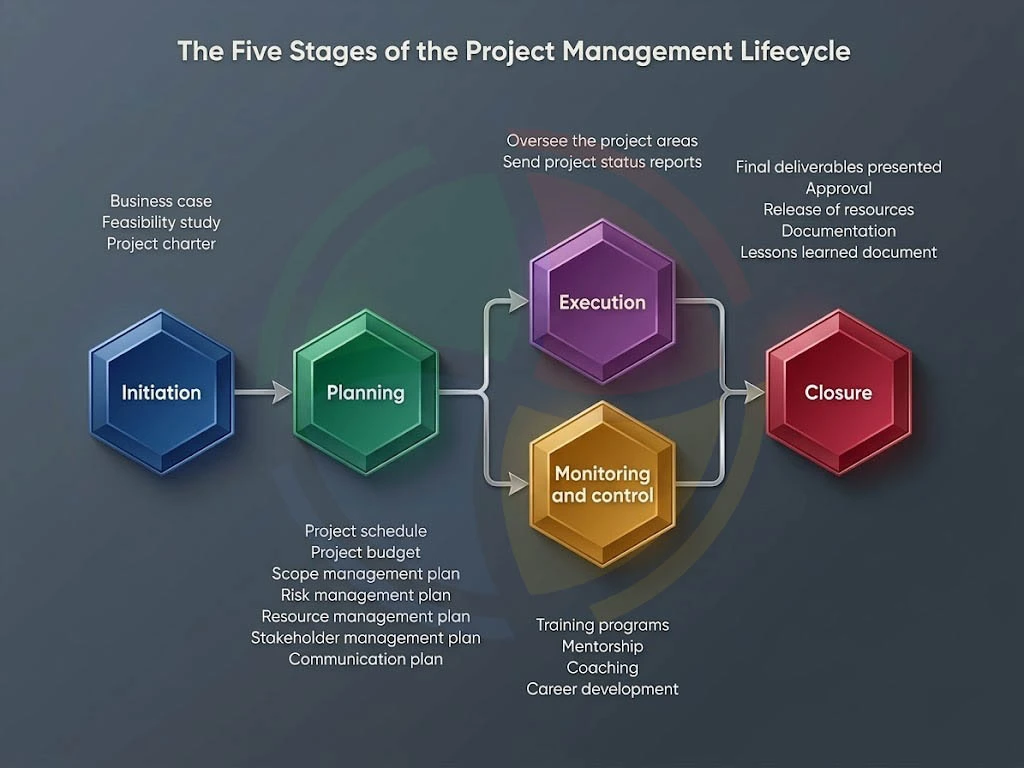
Projects typically move through defined stages that guide how work is planned, executed, and evaluated. ServiceNow project management supports this lifecycle by providing defined tools to manage each stage within the platform.
Here’s a phase-wise breakdown of the ServiceNow project management lifecycle:
1. Project Initiation
The initiation stage defines the purpose and scope of the project. At this stage, you identify the business objective, outline expected outcomes, and determine the stakeholders involved in project delivery.
Within ServiceNow, you can create project records to capture key information, such as project goals, ownership, high-level timelines, and initial requirements. It becomes your starting point before detailed planning begins.
2. Project Planning
During this stage, you use the platform to define tasks, establish milestones, allocate resources, and estimate timelines and budgets.
Assigning the right team members based on availability and expertise helps maintain realistic delivery schedules.
Use task dependencies and milestone tracking to identify potential scheduling conflicts early. This allows you to adjust timelines before the project enters active execution.
3. Project Execution
This stage focuses on delivering the planned work. Teams carry out assigned tasks, collaborate across functions, and move deliverables toward completion.
Task workflows, automated updates, and shared workspaces help streamline execution and keep teams aligned.
Project managers ensure work progresses as planned, coordinate dependencies, and maintain momentum across milestones.
4. Monitoring and Control
Project monitoring runs parallel to execution and ensures the project is on schedule and within defined parameters. It involves tracking progress, evaluating performance metrics, and managing risks.
ServiceNow dashboards and reporting tools provide real-time visibility into project health, progress, and key metrics.
Project managers use these insights to identify risks, address issues early, and take corrective actions to keep the project within defined parameters.
Use dashboards and automated reports for regular project review. Consistent monitoring helps detect small issues before they escalate into major delivery risks.
5. Project Closure
The final stage formally completes the project once all deliverables have been achieved. It involves confirming task completion, reviewing project outcomes, and documenting final results.
ServiceNow generates reports that summarize project performance, timelines, and resource utilization. These insights help your teams to evaluate the satisfaction levels.
Documenting lessons learned during this stage is also valuable. By analyzing successes and challenges, organizations can refine project processes and improve planning for future initiatives.
Getting Started With ServiceNow Project Management
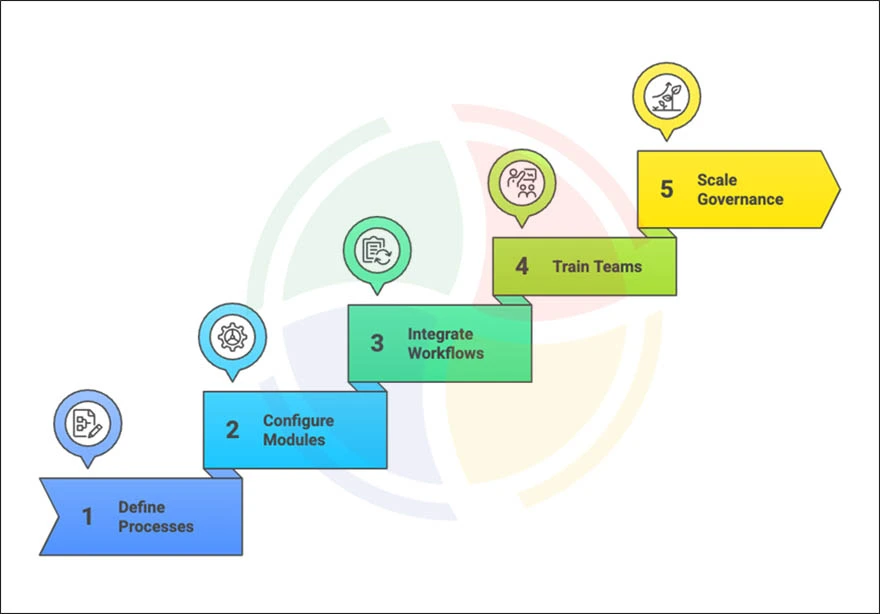
It begins with aligning the platform to your existing project management practices. To make the most of the system, you need a systematic approach that connects projects, teams, and governance processes.
Take a look at the steps to follow to leverage ServiceNow project management:
Step 1: Defining Project Management Processes
Start by outlining how you initiate, plan, execute, and monitor projects within your organization. Clear processes help ensure the platform reflects your project management framework.
Step 2: Configuring Platform Modules
You can then configure the relevant modules to support project records, task structures, milestones, and reporting requirements so the system aligns with your work processes.
For complex use cases, professional ServiceNow consulting services support effective platform configuration and adoption.
Step 3: Integrating with Existing Workflows
Post-configuration, connect it with your existing enterprise processes, such as IT service management, change management, or development workflows.
Step 4: Training Project Teams
Your project managers and team members must understand how to manage tasks, update progress, and collaborate within the system. Proper training helps teams adopt the platform more effectively.
Step 5: Scaling Project Governance
As adoption grows, you can introduce standardized templates, reporting frameworks, and governance models to manage multiple projects across departments.
Common ServiceNow Project Management Methodologies
Organizations adopt different project management approaches during ServiceNow implementation, depending on project type, team structure, and delivery requirements.
Below are some of the most widely used types of project management:
- Waterfall Project Management: A sequential approach where each phase is completed before the next begins. Best suited for projects with fixed requirements.
- ServiceNow Agile Project Management: An iterative approach that delivers work in smaller cycles, enabling continuous feedback and quick adaptation.
- Lean Project Management: Maximizes value by eliminating waste and improving efficiency through streamlined workflows.
- Scrum Project Management: An Agile framework that organizes work into time-bound sprints, supporting structured collaboration and regular reviews.
- Kanban Method: A visual method that tracks tasks across workflow stages to identify bottlenecks and manage continuous delivery.
- Hybrid Project Management: Combines Waterfall and Agile approaches to balance structured planning with flexible execution.
- Strategic Portfolio Management (SPM): Aligns projects with business strategy and investment priorities while supporting project portfolio management in ServiceNow.
- Portfolio Project Management (PPM): Provides centralized visibility across multiple projects to improve planning, resource allocation, and decision-making.
- Customer Project Management (CPM): Manages customer-facing projects within ServiceNow, enhancing collaboration, visibility, and delivery timelines.
Make ServiceNow Project Management Efficient with Aegis Softtech
If your organization wants to centralize tasks and gain real-time visibility into project progress, ServiceNow project management is designed to help.
Structured workflows, dependency tracking, and dashboards help teams stay aligned, and projects stay on schedule.
At Aegis Softtech, we help organizations implement ServiceNow project management with defined processes, reusable templates, and Agile practices to scale project governance across departments.
Our ServiceNow developers ensure you get operational clarity, improved collaboration, and predictable project outcomes.
FAQs
Q1: Is ServiceNow a PPM tool?
ServiceNow isn’t just a PPM tool; it provides project-level management within a broader Strategic Portfolio Management framework. It helps you track tasks, timelines, and resources while ensuring alignment with portfolio priorities.
Q2: What are the four stages of project management?
Projects move through initiation, planning, execution, and closure. ServiceNow streamlines each stage, helping you define scope, allocate resources, monitor progress, and capture lessons learned for continuous improvement.
Q3: What is the difference between ServiceNow project management and PPM?
Project management focuses on delivering individual projects efficiently, while PPM ensures multiple initiatives align with strategic goals. ServiceNow connects both, giving teams day-to-day control while portfolio leaders oversee broader investment priorities.
Q4: Does ServiceNow support agile project management?
Yes, ServiceNow supports Agile workflows, sprint planning, and backlog management, enabling iterative delivery while maintaining visibility and integration with enterprise processes.