
Your React component needs user data, their last five orders, and unread notifications.
With REST, that’s three endpoints, three loading states, and a waterfall of requests before anything renders. Your users stare at spinners while your frontend juggles promises and stitches together responses that were never designed to work together.
GraphQL for React.js eliminates this friction. One query, one request, exactly the data your component needs, nothing more. Let’s break down how to implement GraphQL API integration in React from client setup to production-ready patterns. Let’s dive in.
Key Takeaways
- The core advantage: GraphQL lets components declare their exact data requirements, eliminating over-fetching and multi-endpoint orchestration.
- Client library choice: Apollo Client in React offers the most mature ecosystem; Relay GraphQL React excels at large-scale applications with strict performance needs.
- Data operations: GraphQL queries and mutations in React integrate through hooks like useQuery and useMutation, binding data fetching directly to component lifecycles.
- Cache behavior: Normalized caching stores entities by ID and type, automatically updating every component displaying the same data.
- Real-time capability: GraphQL subscriptions in React enable live updates over WebSocket without manual connection management.
- Production concerns: Type generation, error boundaries, persisted queries, and pagination patterns that scale.
Why GraphQL Transforms Data Fetching Patterns in React
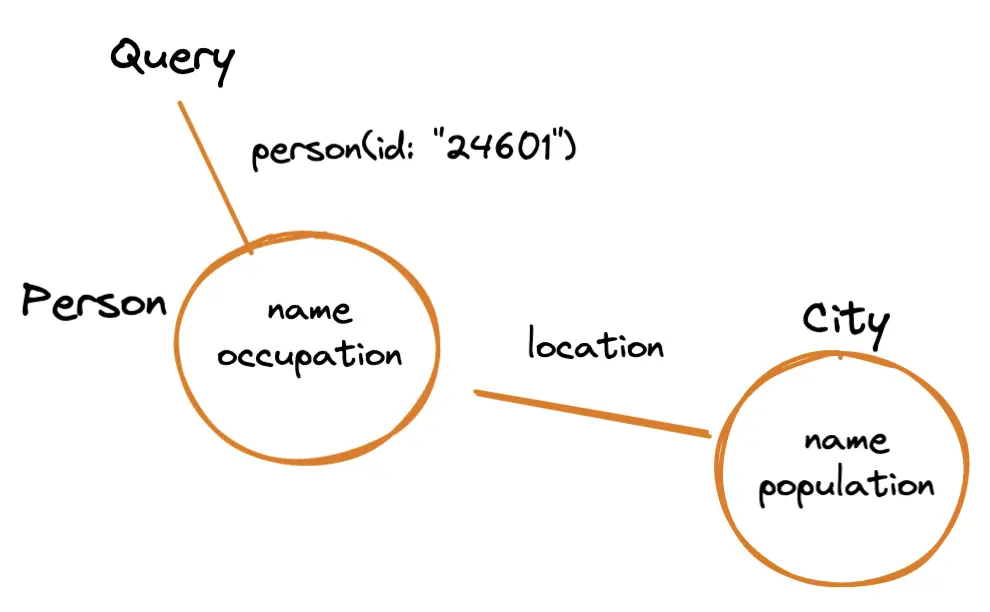
Traditional REST APIs force frontend developers to work around backend constraints. You either fetch too much data or make multiple round trips to assemble what a single component needs. Using GraphQL with React inverts this relationship; your UI defines the data shape, and the server responds accordingly.
Consider a dashboard displaying user profiles, recent orders, and notifications. With REST, this might require three separate endpoints:
GET /api/users/123
GET /api/users/123/orders?limit=5
GET /api/users/123/notifications
With GraphQL, one query handles everything:
query DashboardData($userId: ID!) {
  user(id: $userId) {
    name
    email
    avatar
    orders(first: 5) {
      id
      total
      status
    }
    notifications(unread: true) {
      id
      message
      createdAt
    }
  }
}
This shift fundamentally changes frontend API architecture. Components become self-documenting; their queries explicitly declare data dependencies. Refactoring becomes safer because changing a query immediately reveals which components are affected.
Aegis Softtech implements GraphQL subscriptions in React for chat systems, live dashboards, and collaborative tools.
Core Concepts of GraphQL for React Developers
Using GraphQL with React requires understanding three operations: queries for reading data, mutations for writing data, and subscriptions for real-time updates.
GraphQL Queries in React
Queries fetch data. Each component declares its data requirements, and the GraphQL client handles execution and caching.
query GetUserProfile($id: ID!) {
  user(id: $id) {
    id
    name
    email
    department {
      id
      name
    }
  }
}
This query requests specific fields from a user and their related department. The component receives exactly this shape without any extraneous data or missing fields.
In React, queries bind to components through hooks. The component re-renders when data arrives or updates:
function UserProfile({ userId }) {
  const { loading, error, data } = useQuery(GET_USER_PROFILE, {
    variables: { id: userId }
  });

  if (loading) return <ProfileSkeleton />;
  if (error) return <ErrorMessage error={error} />;

  return (
    <div>
      <h1>{data.user.name}</h1>
      <p>{data.user.department.name}</p>
    </div>
  );
}
The component’s data dependencies are explicit. Any developer reading this code immediately understands what UserProfile requires.
GraphQL Mutations in React
GraphQL queries and mutations in React handle read and write operations, respectively. Mutations modify server-side data—creating records, updating fields, and deleting entries.
mutation UpdateUser($id: ID!, $input: UserInput!) {
  updateUser(id: $id, input: $input) {
    id
    name
    email
  }
}
The mutation returns the updated entity, allowing the client to refresh its cache without additional requests:
function EditProfileForm({ user }) {
  const [updateUser, { loading }] = useMutation(UPDATE_USER);

  const handleSubmit = async (formData) => {
    await updateUser({
      variables: { id: user.id, input: formData },
      optimisticResponse: {
        updateUser: {
          __typename: 'User',
          id: user.id,
          ...formData
        }
      }
    });
  };

  return (
    <form onSubmit={handleSubmit}>
      {/* form fields */}
      <button disabled={loading}>Save</button>
    </form>
  );
}
The optimisticResponse updates the UI immediately while the network request completes. If the mutation fails, the client rolls back automatically.
GraphQL Subscriptions in React
GraphQL subscriptions in React enable real-time features through persistent WebSocket connections. When server-side data changes, subscribed clients receive updates immediately.
subscription OnNewMessage($channelId: ID!) {
  messageAdded(channelId: $channelId) {
    id
    content
    sender {
      name
    }
    createdAt
  }
}
Subscriptions suit chat applications, live dashboards, collaborative editing, and any feature where users expect instant updates:
function ChatMessages({ channelId }) {
  const { data } = useSubscription(MESSAGE_SUBSCRIPTION, {
    variables: { channelId }
  });

  useEffect(() => {
    if (data?.messageAdded) {
      // Handle new message arrival
    }
  }, [data]);
}
For production implementations, combine subscriptions with initial queries. Fetch existing data with useQuery, then use subscribeToMore to append real-time updates to the cache.
Popular GraphQL Clients for React.js
Choosing a React GraphQL client shapes how you write queries, manage cache, and handle errors. Three categories dominate the ecosystem.
Apollo Client
via Apollo GraphQL
Apollo Client in React offers the most comprehensive feature set and the largest community. It handles caching, state management, error handling, and developer tooling out of the box.
Key capabilities include:
- Normalized caching: Stores entities by type and ID, enabling automatic UI updates when data changes anywhere in the application.
- Declarative hooks: useQuery, useMutation, and useSubscription integrate naturally with React’s component model.
- Local state management: Reactive variables and the @client directive let Apollo replace Redux or Context for global state.
- DevTools: Browser extension provides cache inspection, query history, and mutation tracking.
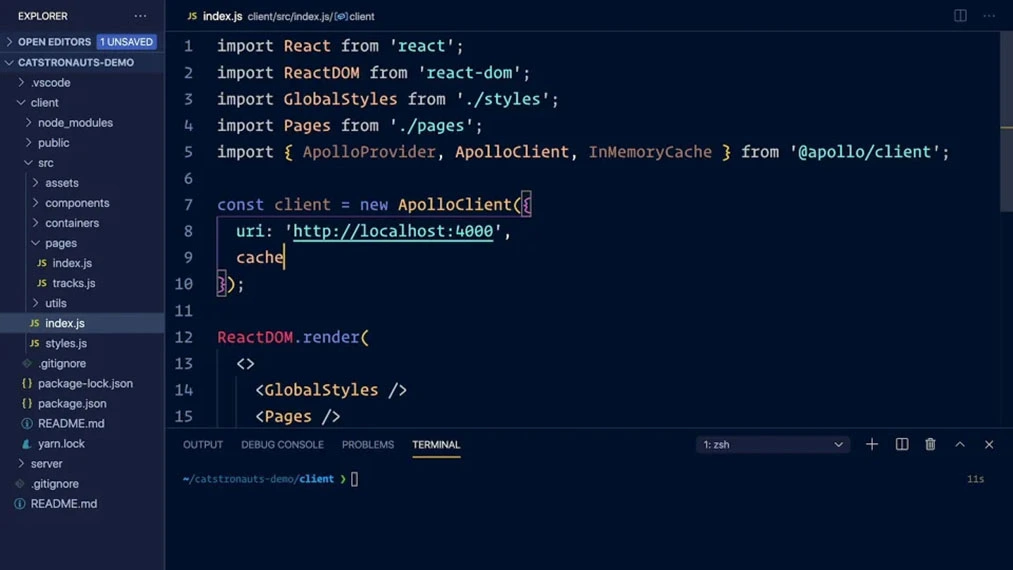
Setup requires minimal configuration:
import { ApolloClient, InMemoryCache, ApolloProvider } from '@apollo/client';
const client = new ApolloClient({
  uri: 'https://api.example.com/graphql',
  cache: new InMemoryCache()
});

function App() {
  return (
    <ApolloProvider client={client}>
      <Dashboard />
    </ApolloProvider>
  );
}
Apollo suits most React applications. The learning curve is manageable, documentation is extensive, and the ecosystem includes solutions for authentication, file uploads, and offline support.
Relay
via Relay
Relay GraphQL React takes an opinionated approach optimized for large-scale applications. Developed by Meta, it enforces patterns that prevent performance problems before they occur.
Relay’s distinguishing features include:
- Compiler-driven optimization: Static analysis at build time generates efficient queries and catches errors before runtime.
- Fragment co-location: Components declare data requirements as fragments, enabling safe refactoring and automatic query composition.
- Automatic pagination: Built-in support for cursor-based pagination with connection types.
- Garbage collection: Automatic cache eviction prevents memory leaks in long-running applications.
Relay requires upfront investment. Your GraphQL schema must follow specific conventions, like the Node interface for refetchable objects and Connection types for pagination. The compiler adds a build step. For teams building applications at scale where these constraints align with existing practices, Relay delivers significant maintainability benefits.
Lightweight Alternatives
via urql
Not every project needs Apollo’s full feature set or Relay’s architectural opinions. Lighter options and AI tools for React developers exist:
- urql: Minimal footprint with extensible architecture. Exchanges (plugins) add features as needed. Ideal when bundle size matters
- React Query + graphql-request: Combines React Query’s caching with a thin GraphQL client. Works well for teams already using React Query for REST endpoints
- SWR + custom fetcher: Vercel’s stale-while-revalidate library pairs with any fetch implementation. Suitable when you prefer SWR’s caching semantics
These alternatives trade features for simplicity. They work well for smaller applications or teams with specific constraints.
Performance Optimization Techniques
Performance optimization with GraphQL requires attention to network efficiency, caching behavior, rendering patterns, and data loading strategies.
Query Batching
When multiple components mount simultaneously, each can trigger its own GraphQL query. Without batching, this means separate network requests for each operation, adding latency and server load.
Query batching combines these operations into a single HTTP request:
import { BatchHttpLink } from '@apollo/client/link/batch-http';
const link = new BatchHttpLink({
  uri: '/graphql',
  batchMax: 10,
  batchInterval: 20 // milliseconds
});
The client waits briefly (20ms in this example) to collect queries, then sends them together. The server processes all operations and returns results in one response.
Caching Strategies
GraphQL caching strategies determine how aggressively your client reuses stored data versus fetching fresh information. Apollo’s fetch policies provide fine-grained control:
- cache-first (default): Returns cached data when available; fetches from the network on cache miss.
- network-only: Always fetches fresh data; used for frequently changing information like stock prices or live scores.
- cache-and-network: Returns cached data immediately for fast UI, then updates with network response.
- no-cache: Bypasses cache entirely; rarely needed in practice.
Configure policies based on data characteristics:
// Real-time data needs fresh fetches
const { data: prices } = useQuery(GET_STOCK_PRICES, {
  fetchPolicy: 'network-only',
  pollInterval: 5000
});

// User profile can serve from cache with background refresh
const { data: profile } = useQuery(GET_USER_PROFILE, {
  fetchPolicy: 'cache-and-network'
});
Preventing Unnecessary Re-renders
GraphQL data flowing through components can trigger re-renders even when the displayed data hasn’t changed. Fragment co-location solves this SINCE components declare their own data requirements as fragments, and only re-render when their specific fields update:
// UserCard only re-renders when these specific fields change
const USER_CARD_FRAGMENT = gql`
  fragment UserCard on User {
    id
    name
    avatar
  }
`;

function UserCard({ user }) {
  return (
    <div>
      <img src={user.avatar} alt={user.name} />
      <h3>{user.name}</h3>
    </div>
  );
}
Parent components compose fragments without knowledge of child data requirements. Changes to unrelated fields, like email, preferences, and billing, don’t trigger UserCard re-renders.
Pagination and Lazy Loading
Fetching large datasets upfront kills performance. Cursor-based pagination loads data incrementally as users scroll or click “load more”:
const { data, fetchMore } = useQuery(GET_PRODUCTS, {
  variables: { first: 20 }
});

const loadMore = () => {
  fetchMore({
    variables: {
      first: 20,
      after: data.products.pageInfo.endCursor
    }
  });
};
Cursor-based pagination scales better than offset-based approaches. Adding or removing items doesn’t shift pages or cause duplicates. Configure your cache to merge paginated results:
const cache = new InMemoryCache({
  typePolicies: {
    Query: {
      fields: {
        products: {
          keyArgs: ['category'],
          merge(existing, incoming, { args }) {
            if (!args?.after) return incoming;
            return {
              ...incoming,
              edges: [...(existing?.edges || []), ...incoming.edges]
            };
          }
        }
      }
    }
  }
});
GraphQL vs. REST for React Applications
REST vs. GraphQL for React apps presents tradeoffs, with each approach suiting different scenarios.
| Aspect | REST | GraphQL |
| Data fetching | Fixed endpoints return predetermined payloads | Clients specify exact fields needed per request |
| Network requests | Multiple endpoints for related data | Single request retrieves nested relationships |
| Caching | HTTP caching at CDN/browser level | Client-side normalized caching by entity |
| Versioning | URL or header-based API versions | Schema evolution with deprecation directives |
| File uploads | Native multipart support | Requires separate handling or spec extensions |
| Learning curve | Familiar HTTP semantics | New query language and client concepts |
| Tooling maturity | Decades of established patterns | Younger ecosystem, rapidly evolving |
| Over-fetching | Common without custom endpoints | Eliminated by design |
| Real-time updates | Polling or separate WebSocket implementation | Native subscription support |
| Error handling | HTTP status codes | Partial data with granular error responses |
When GraphQL is the Right Choice for React.js
GraphQL introduces complexity. That complexity pays off in specific scenarios and creates unnecessary overhead in others.
| Scenario | GraphQL Fit | Reasoning |
| Large data-driven UIs | ✅ Strong | Dashboards, admin panels, and CMS applications display data from multiple entities on single screens. GraphQL fetches interconnected data in one request. |
| Multi-client applications | ✅ Strong | Web, mobile, and third-party consumers request exactly the fields they need from the same schema. No backend changes for client-specific payloads. |
| Real-time features | ✅ Strong | Chat, notifications, live collaboration, and streaming data integrate naturally through subscriptions. Same schema serves initial fetch and ongoing updates. |
| Rapidly evolving products | ✅ Strong | New fields become available immediately once added to the schema. Deprecated fields generate warnings without breaking existing clients. |
| Simple CRUD applications | ⚠️ Weak | REST’s resource-oriented model maps cleanly to basic create/read/update/delete operations with less setup overhead. |
| Heavy CDN caching needs | ⚠️ Weak | REST’s HTTP caching semantics work at the CDN level. GraphQL requires application-level caching strategies. |
| Teams new to GraphQL | ⚠️ Weak | Learning curve adds delivery risk when timelines are tight. REST provides a faster path for teams without GraphQL experience. |
| External system integrations | ⚠️ Weak | Many third-party services expect REST endpoints. GraphQL may require translation layers. |
How Aegis Softtech Builds GraphQL-Powered React Applications
At Aegis Softtech, we help organizations implement GraphQL for React.js with architectures designed for long-term maintainability and performance.
Our React.js Development Services cover the full implementation lifecycle:
- API design aligned with frontend needs: We design schemas that reflect domain models while optimizing for how React components consume data.
- React + GraphQL integration using Apollo or Relay: We select and configure the right React GraphQL client based on your application’s scale and requirements.
- Security and access control: Our React.js developers implement field-level authorization, query depth limiting, and complexity analysis to protect your GraphQL endpoint.
- Migration from REST to GraphQL: For existing applications, we plan incremental adoption strategies.
FAQs
1. What is the best GraphQL client for React?
Apollo Client in React suits most applications with its comprehensive caching, hooks-based API, and extensive documentation. Relay GraphQL React excels in large-scale applications where compiler-driven optimization and strict conventions prevent performance issues. For smaller projects prioritizing bundle size, urql offers a lighter alternative with an extensible architecture.
2. Is GraphQL better than REST API?
Neither is universally better. GraphQL eliminates over-fetching, reduces network requests for complex data, and provides type safety through schemas. REST offers simpler HTTP caching, familiar patterns, and mature tooling.
Choose GraphQL when your React application consumes deeply nested or interconnected data from multiple entities. Choose REST for straightforward CRUD operations with predictable access patterns.
3. Can I use React Query with GraphQL?
Yes. React Query pairs with lightweight GraphQL clients like graphql-request. This combination works well for teams already using React Query for REST endpoints who want to add GraphQL without adopting Apollo’s full ecosystem.
4. Is GraphQL better than JSON?
GraphQL and JSON serve different purposes. JSON is a data format, how information is structured and transmitted. GraphQL is a query language and runtime, how clients request and receive data. GraphQL APIs typically return JSON responses.
5. Is GraphQL faster than HTTP?
GraphQL operates over HTTP, so this comparison doesn’t apply directly. GraphQL can reduce total data transfer by eliminating over-fetching and can reduce latency by fetching related data in single requests. However, GraphQL queries require server-side parsing and validation that simple REST endpoints avoid.
6. Is GraphQL suitable for small projects?
GraphQL adds complexity with schema design, client configuration, and new concepts for developers unfamiliar with the technology.
For small projects with simple data requirements, REST often delivers faster with less overhead. Consider GraphQL for small projects when the data model involves complex relationships, when you anticipate significant growth, or when real-time features are core requirements.