
Every few years, a Java release comes along that redefines how enterprise teams think about scalability, performance, and code simplicity. Java 25 LTS is that release.
For the first time, developers can write straightforward blocking code that handles millions of concurrent requests. Garbage collection pauses drop below 10 milliseconds even on large heaps. Context propagation finally works safely across threads. And pattern matching transforms verbose conditional logic into clean, declarative expressions.
These capabilities existed in preview form across earlier releases. Java 25 LTS graduates them to production status, backed by the extended support window that enterprises require for mission-critical systems.
This blog breaks down what’s new in Java 25 LTS, explains how each feature solves real problems, and provides practical guidance for teams evaluating adoption.
Key Takeaways
- Release philosophy: Java 25 finalizes features from preview and incubation, delivering production-ready capabilities without disruptive changes.
- Language updates: Pattern matching for switch and record patterns reduces boilerplate and makes type-based logic declarative and exhaustive.
- JVM improvements: Generational ZGC delivers sub-10ms pause times while Virtual Threads enable millions of concurrent tasks with simple blocking code.
- Platform enhancements: Scoped Values replace ThreadLocal for safe context propagation, and the FFM API enables stable native interoperability.
- Enterprise benefits: Extended support, predictable updates, performance consistency, and security hardening make this release ideal for production environments.
- Migration approach: Runtime-first adoption, incremental feature migration, and phased rollouts reduce risk and build confidence across the organization.
What Java 25 LTS Means in the Java Release Cycle
Oracle releases a new Java version every six months, but most enterprises do not upgrade with every release. The Java LTS release cycle provides a predictable support window that allows organizations to plan upgrades around stability and long-term vendor support.
Java 25 LTS follows the established pattern of Java 8, 11, 17, and 21 as a long-term support (LTS) version. Organizations can expect extended updates, security patches, and vendor support for years after the initial release. This makes LTS versions the preferred choice for production environments where stability and predictability outweigh access to the latest experimental features.
What’s New in Java 25 LTS
Java 25 LTS features span four major categories, with each addressing specific pain points that enterprise Java developers encounter when building and maintaining large-scale systems.
Java Language Enhancements
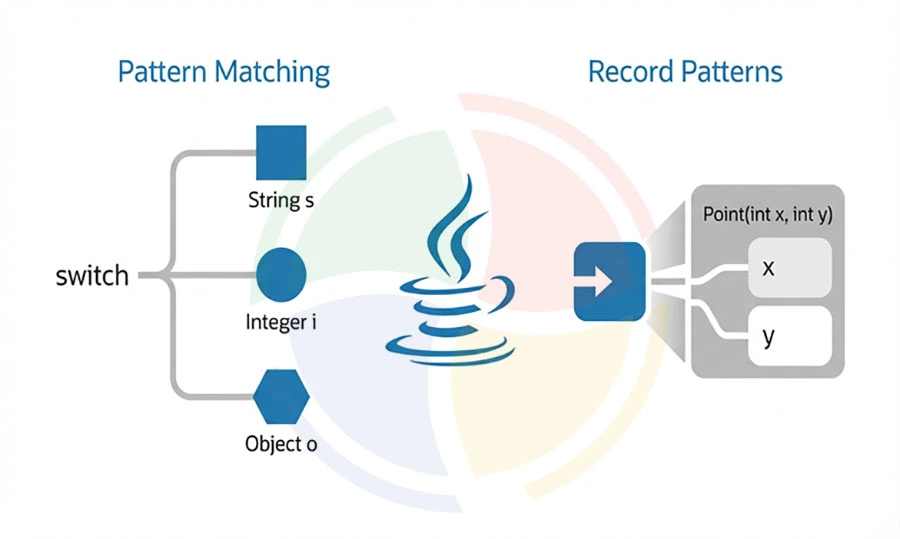
Java language updates in this release focus on reducing boilerplate and making business logic easier to read.
Two capabilities stand out for their impact on everyday coding:
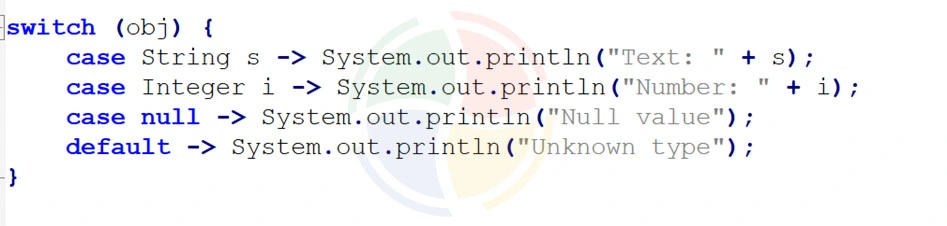
- Pattern Matching for switch eliminates the verbose instanceof-then-cast pattern that clutters type-based logic. The feature delivers several improvements over traditional approaches:
- Type checks and variable binding happen in a single step
- The compiler enforces exhaustive case handling, catching missed conditions at compile time
- Business rules become declarative expressions that read like specifications
- Nested patterns allow deep matching without temporary variables
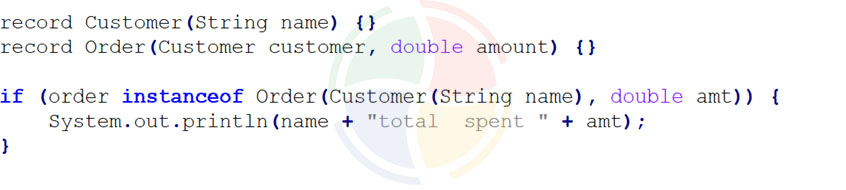
2. Record Patterns extend pattern matching to work with Java records, enabling automatic extraction of nested values:
- Getters and manual unpacking disappear from domain logic
- Nested record structures decompose cleanly in a single pattern
- Immutable data models become the natural design choice
- Code aligns with modern data-centric programming practices
JVM and Performance Improvements
JVM enhancements deliver measurable gains in garbage collection, concurrency, and runtime efficiency. These improvements work at the platform level, benefiting applications without code changes.
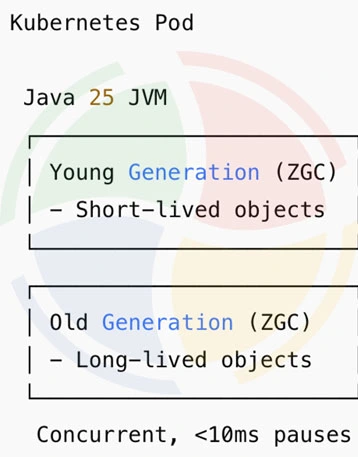
Generational ZGC separates short-lived objects from long-lived objects, dramatically improving garbage collection efficiency:
- Pause times stay consistently below 10 milliseconds, even under heavy load
- CPU overhead drops because the collector focuses on young generation objects that die quickly
- Memory utilization improves through faster reclamation of temporary allocations
- Large heaps in containerized environments see predictable latency profiles
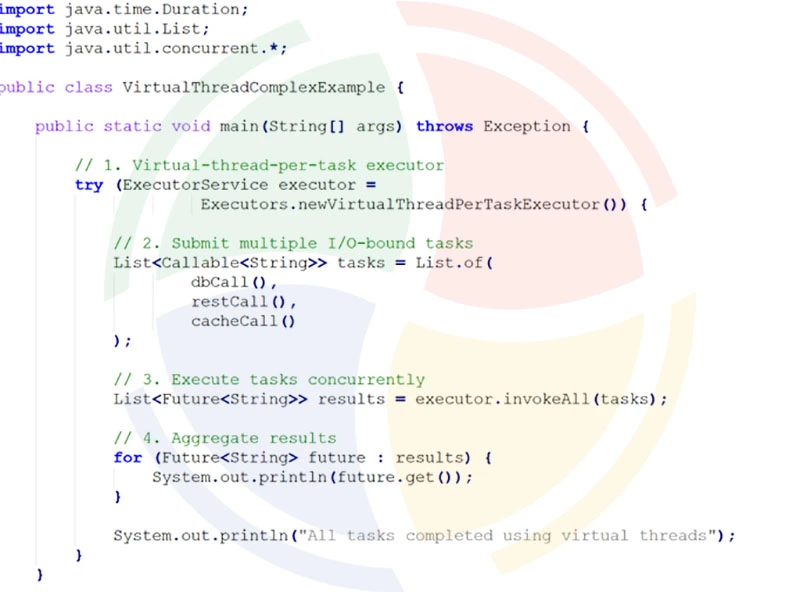
Virtual Threads decouple Java concurrency from operating system threads, enabling massive scalability with simple code:
- Millions of concurrent tasks run with minimal memory overhead
- Blocking operations like database calls and HTTP requests no longer waste OS threads
- Developers write straightforward synchronous code that scales like reactive systems
- Thread dumps and profiling tools provide full visibility into virtual thread behavior
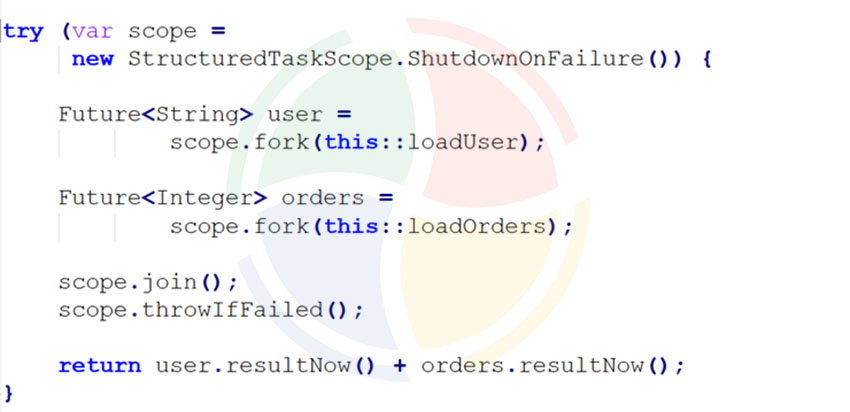
Structured Concurrency treats parallel tasks as a single unit of work with clear lifecycle boundaries:
- Child tasks automatically cancel when a parent scope fails or completes
- Error handling becomes deterministic because failures propagate predictably
- Resource leaks disappear because scopes guarantee cleanup on exit
- Debugging parallel code becomes tractable because ownership is explicit
Platform and API Updates
Java platform changes address core libraries and runtime behavior that affect how applications interact with their environment.
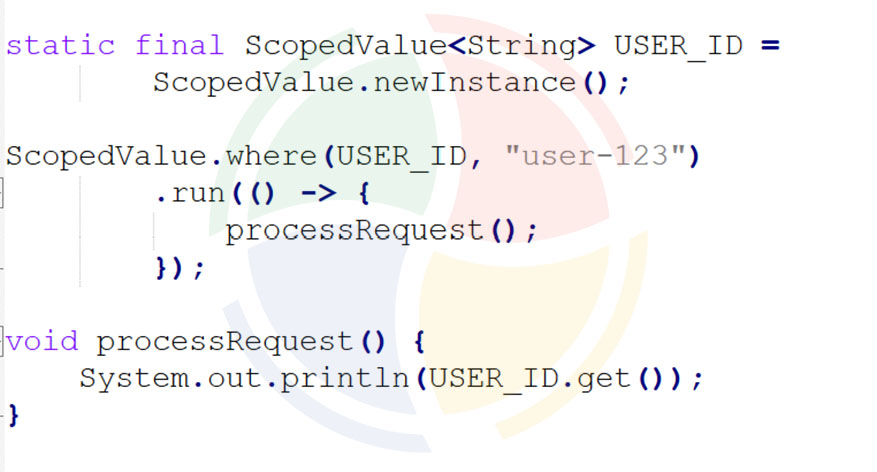
Scoped Values replace ThreadLocal for safe context propagation in concurrent systems:
- Values are immutable and explicitly scoped to prevent accidental leakage
- Automatic cleanup eliminates the manual housekeeping that ThreadLocal requires
- Virtual threads and structured concurrency integrate seamlessly with scoped context
- Request tracing, security metadata, and logging correlation IDs propagate reliably
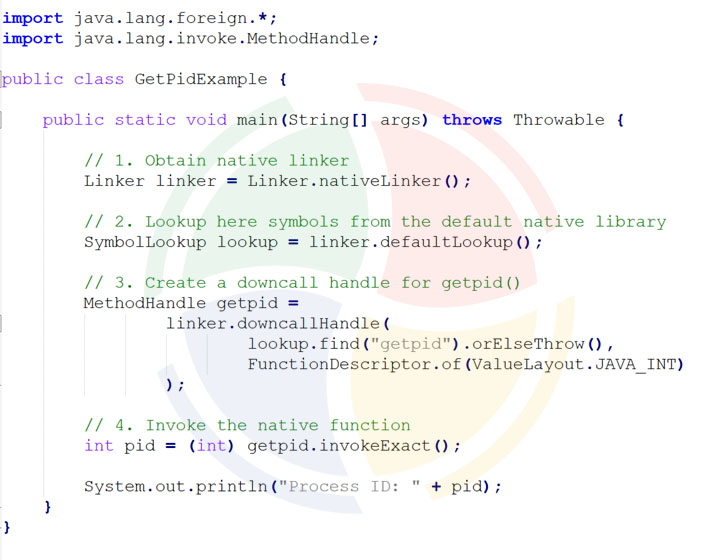
Foreign Function and Memory API provides safe, high-performance access to native code and off-heap memory:
- Type-safe bindings replace the crash-prone patterns of JNI
- Explicit memory lifetimes prevent leaks and use-after-free errors
- Performance matches or exceeds JNI for most workloads
- AI/ML libraries and system-level integrations become practical without stability concerns
Container and Cloud Optimizations improve runtime behavior in Kubernetes and cloud environments:
- Startup time decreases through JIT compilation improvements
- Container resource limits are detected and respected automatically
- Memory utilization aligns with pod configurations without manual tuning
- Autoscaling behaves predictably because the JVM reports accurate metrics
Security Enhancements in Java 25 LTS
Java security updates strengthen defaults and remove deprecated algorithms that no longer meet modern standards.
The security improvements apply automatically at the runtime level:
- Cryptographic defaults upgrade to current best practices
- TLS configurations enforce stronger cipher suites by default
- Deprecated algorithms that pose known risks are disabled or removed
- Secure-by-default behavior reduces the surface area for misconfiguration
Java 25 LTS: Feature-Wise Migration
Java 25 adoption works best incrementally. Every feature is opt-in, which allows teams to keep existing code stable while adopting new capabilities in fresh development.
Here’s how to approach migration for each feature.
Phase 1: Runtime-First Migration
The lowest-risk entry point into Java 25 LTS is upgrading the runtime without changing application code.
At this stage, teams focus on:
- Moving build and deployment pipelines to Java 25
- Validating application behavior under the new JVM
- Observing performance, memory usage, and startup characteristics
This phase delivers immediate value through improved container awareness, more predictable memory behavior, and better garbage collection defaults.
Because no code changes are required, this step builds confidence while keeping operational risk low.
Phase 2: Concurrency Model Adoption
Once the runtime upgrade is stable, teams can begin modernizing concurrency where it delivers clear benefits.
Virtual Threads
Virtual Threads should be introduced selectively, starting with services that:
- Handle high request concurrency
- Spend significant time waiting on IO
- Previously relied on large or carefully tuned thread pools
Adoption typically involves replacing executor configuration rather than rewriting business logic. Blocking code remains valid, which minimizes migration effort.
Virtual Threads should not be applied universally. CPU-bound workloads and batch processing pipelines should continue using platform threads.
Structured Concurrency
Structured Concurrency is most effective in services that coordinate multiple parallel operations within a single request.
Adoption works best when:
- Applied to new orchestration or aggregation services
- Experience with enterprise Java applications across industries an
- Introduced where failure handling is currently fragile or inconsistent
Rather than refactoring existing stable logic, Structured Concurrency should establish a new default for concurrency in newly developed components.
Phase 3: Context Propagation Modernization
Context handling should be addressed independently of concurrency changes.
Scoped Values
Scoped Values provide a safer alternative to ThreadLocal, particularly in systems using asynchronous execution or Virtual Threads.
Migration should begin at system boundaries where context is introduced:
- Request entry points
- Authentication layers
- Tracing and logging infrastructure
Existing business logic can remain unchanged while context propagation becomes explicit, immutable, and lifecycle-bound. This reduces the risk of context leakage and improves observability correctness.
Phase 4: Language-Level Adoption
Language enhancements in Java 25 are designed to be opportunistic rather than mandatory.
Pattern matching and record patterns are best adopted:
- During feature development
- As part of refactoring or cleanup efforts
- When modifying complex conditional logic or record-heavy models
These features improve clarity and reduce boilerplate without affecting runtime behavior, making them low-risk improvements over time.
Phase 5: Performance Tuning and Optimization
Only after runtime and structural changes are in place should teams focus on tuning.
This phase includes:
- Enabling and validating Generational ZGC
- Reviewing JVM flags inherited from older Java versions
- Aligning GC and memory behavior with real production load
At this point, performance gains are driven by observability data rather than assumptions, ensuring tuning efforts are targeted and effective.
Why Java 25 LTS is a Developer Productivity Release
Java 25 LTS shifts focus from adding features to reducing the complexity developers face daily. The release eliminates the traditional trade-off between writing simple code and building scalable systems.
Key productivity improvements include:
- Concurrent code that’s easy to read and debug without reactive frameworks
- Automatic JVM optimization for containers with minimal configuration
- Faster onboarding for new team members across all skill levels
- Reduced production incidents from thread leaks and context propagation issues
- Single clear concurrency model that eliminates architectural debates
- Quick turnaround from concept to production-ready scalable applications
Key Java 25 LTS Benefits for Enterprises
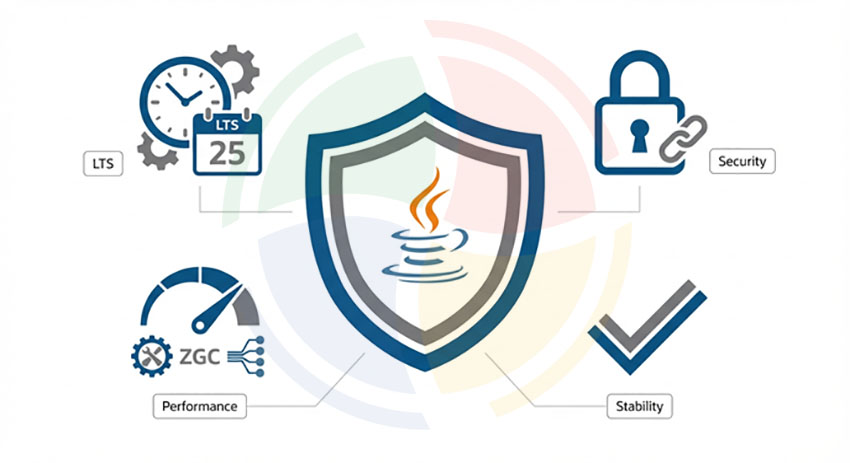
Enterprise Java applications require stability, predictability, and long-term support. Java 25 LTS delivers on each of these requirements while providing meaningful technical improvements.
Organizations evaluating this release should consider the following enterprise benefits:
- Stability and extended support: LTS releases receive security patches and updates for years, reducing the frequency of forced upgrades and allowing teams to focus on business value.
- Predictable update cadence: Enterprises can plan upgrade cycles around known support timelines, aligning Java versions with infrastructure and compliance schedules.
- Performance consistency: Generational ZGC and Virtual Threads deliver measurable improvements in latency, throughput, and resource utilization without requiring application rewrites.
- Compliance and security readiness: Updated cryptographic defaults and security hardening help organizations meet regulatory requirements and audit expectations.
- Reduced upgrade frequency: Teams avoid the churn of tracking every six-month release while still gaining access to mature, production-ready features.
Impact of Java 25 LTS on Existing Applications
Upgrading to a new Java version requires evaluation of backward compatibility in Java and potential migration risks. Java 25 LTS maintains strong compatibility, but teams should understand where attention is needed.
Backward Compatibility Considerations
Java 25 preserves compatibility with well-written applications that follow standard practices. Code that avoids internal APIs, reflection hacks, and deprecated features should run without modification. The platform team has invested heavily in ensuring that compliant applications upgrade smoothly.
However, certain patterns require attention:
- Deep reflection into JDK internals may fail due to module encapsulation
- Deprecated APIs removed in earlier versions remain unavailable
- Security defaults may affect integrations with legacy systems using older protocols
Deprecated APIs and Migration Risks
Each Java release deprecates or removes APIs that no longer align with platform direction. Teams should address deprecation warnings proactively:
- Static analysis tools identify deprecated API usage across large codebases
- Deprecation warnings from Java 17 and 21 should be resolved before upgrading
- Replacement APIs typically offer better performance and safety
- Migration guides document the recommended alternatives for removed functionality
Build Tools and Dependency Alignment
Maven, Gradle, and other build tools require updates to support new Java versions:
- Build tool plugins need compatible versions for Java 25
- Third-party libraries must provide compatible releases
- Dependency audits should verify the entire transitive dependency tree
- Snapshot or beta library versions may be necessary during early adoption
CI/CD and Container Compatibility
Continuous integration pipelines need configuration updates for Java 25:
- Base images must include Java 25 runtime distributions
- Build agents require JDK 25 installation or container images
- Test configurations should validate behavior on the target version
- Deployment manifests may need updated resource requests based on new memory characteristics
Code Optimization and Improvement with Java 25 LTS
Java 25 LTS enables meaningful code-level optimization by aligning application structure with how the JVM now manages execution, concurrency, and memory. Let’s take a closer look.
Concurrency-Aware Optimization
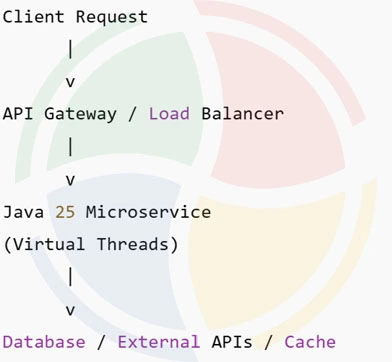
Virtual Threads allow blocking operations to scale efficiently without exhausting operating system threads.
When a blocking call occurs, the JVM parks the virtual thread and reuses the underlying carrier thread for other work. This restores the viability of the thread-per-request model for high-concurrency services.
Key optimization effects include:
- Throughput remains stable under high concurrency
- Thread pool sizing becomes less sensitive
- Synchronous control flow remains intact and debuggable
Complex asynchronous constructs that previously existed to avoid thread exhaustion become unnecessary in many workloads.
Lifecycle-Bound Parallel Execution
Structured Concurrency optimizes parallel execution by enforcing a shared lifecycle for related tasks. Parallel work executes within a defined scope, ensuring that failures propagate consistently and unused work is cancelled automatically.
This approach prevents:
- Background tasks running beyond request completion
- Partial execution following failure conditions
- Resource waste caused by unmanaged parallelism
Execution paths become easier to reason about, while runtime overhead caused by orphaned tasks is reduced.
Context Propagation Optimization
Scoped Values improve performance and correctness by replacing implicit thread-bound state with explicitly scoped, immutable context. Context propagation becomes predictable across concurrent execution paths, including virtual threads.
This model removes the need for:
- Defensive cleanup logic
- Thread identity assumptions
- Hidden dependencies between execution paths
Observability and security mechanisms benefit from clearer context lifecycles and reduced risk of leakage.
Memory Management Optimization
Generational ZGC improves allocation efficiency through separation of short-lived and long-lived objects while preserving low-latency guarantees. Temporary allocations are reclaimed more aggressively, reducing pressure on long-lived memory regions.
Optimization outcomes typically include:
- More consistent latency under load
- Reduced CPU overhead during garbage collection
- Lower reliance on manual GC tuning
These improvements are achieved primarily through runtime configuration rather than application code changes.
Language-Driven Code Optimization
Pattern matching and record patterns reduce boilerplate and clarify control flow. Type checks, data extraction, and conditional logic are expressed declaratively, improving readability and maintainability.
Cleaner language constructs lead to:
- Fewer runtime type errors
- Smaller and more focused methods
- Faster reviews and safer refactoring
While these features do not directly affect execution speed, they improve long-term code quality and reduce defect risk.
Teams can also take advantage of Java consulting services to plan phased migrations, modernize Java-based services, and reduce risk during production rollouts on Azure.
Testing and Migration Best Practices for Java 25 LTS
Successful Java upgrade considerations require a structured approach to testing and rollout. The following practices reduce risk and build confidence.
Regression Testing Strategy
Comprehensive regression testing validates that existing functionality works correctly on Java 25.
Automated test suites should cover critical business paths, edge cases, and integration points. Teams should run tests on both the current Java version and Java 25 to identify behavioral differences.
Performance Benchmarking
Performance characteristics may change with a new JVM version. Teams should establish baseline metrics on the current version and compare them against Java 25.
Key metrics include latency percentiles, throughput, memory utilization, and garbage collection behavior.
Security Validation
Security-sensitive applications require validation that cryptographic operations, TLS connections, and authentication flows work correctly. Updated security defaults may affect integrations with external systems that use older protocols or cipher suites.
Phased Rollout Approach
Production migration should follow a phased approach.
Teams can start with non-critical services, validate behavior under real traffic, and gradually expand to business-critical workloads. Observability metrics guide decisions at each phase.
We have experienced Java developers and architects who can embed with your team and accelerate delivery.
How Aegis Softtech Supports Java LTS Upgrades
Aegis Softtech partners with enterprises to navigate Java upgrades with confidence. Our team brings hands-on experience with enterprise Java applications across industries and tech stacks.
Our Java Software Development Services include the following capabilities:
- Java version assessment and readiness analysis: Evaluate existing applications, identify compatibility risks, and provide clear recommendations for upgrade paths.
- Migration planning and dependency audits: Create detailed migration plans that address build tools, libraries, and infrastructure dependencies.
- Performance benchmarking and tuning: Establish baselines, run comparative benchmarks, and optimize JVM configurations for production workloads.
- Production rollout support and monitoring: Support phased deployments with observability validation and rapid issue resolution.
FAQs
1. What is the current version of Java 2025?
Java 25 is the latest long-term support release as of 2025. Oracle continues its six-month release cadence for feature releases, but Java 25 LTS remains the recommended version for enterprise production environments due to its extended support window and feature stability.
2. What is the difference between Java 25 and 21?
Java 25 builds on Java 21 by finalizing features that were in preview status:
- Structured Concurrency and Scoped Values graduate to production-ready
- Generational ZGC receives performance improvements
- Virtual Threads gain enhanced stability and observability
Java 21 introduced many of these capabilities in preview form while Java 25 commits them to long-term support.
3. What’s the next Java LTS?
Following the current cadence, the next long-term support release after Java 25 would be Java 29, expected in 2027. Oracle releases LTS versions every two years, giving enterprises predictable planning horizons for upgrade cycles.
4. Should I upgrade to Java 25?
If you are running on Java 17 or 21, evaluate Java 25 for its performance improvements, security updates, and feature stability to decide on an upgrade.
5. What is the difference between Java 17 and 25?
Java 25 introduces significant capabilities not available in Java 17:
- Virtual Threads for scalable concurrency
- Structured Concurrency for safe parallel execution
- Scoped Values for context propagation
- Pattern Matching for switch
- Record Patterns for data decomposition
- Generational ZGC for low-latency garbage collection
- Foreign Function and Memory API for native interoperability
Teams upgrading from Java 17 gain nearly four years of platform evolution.