


Generative AI in Telecom Industry
Next-Gen Connectivity & Automation
The numbers speak for themselves, showcasing that the adoption of generative AI in telecom is no longer an idea to act upon. A staggering 90% of telecom companies have already integrated AI into their operations in some way or other. Of these companies, 48% are in the piloting phase while 41% are actively deploying generative AI solutions.
It’s a big number, with early adopters already experiencing significant returns on their investment.
AI is exactly what your company needs to deliver what it's promising to the customers.








Automate complex processes, optimize network performance, manage massive data influx, and reduce operational costs by adopting this technology. AI-powered analytics helps you deliver reliable and seamless services.
Let’s explore the impact of AI in telecom, why you should invest in it, common use cases, and the future it holds.
Key Highlights
- Reasons for AI Adoption: Rising data demands, the need for real-time analytics, competitive pressure, and the desire for operational efficiency.
- AI Use Cases in Telecom: Network optimization, self-healing networks, AI-powered chatbots for customer service, and real-time fraud detection.
- Challenges of AI: Legacy systems integration, data quality & silos, AI ethics & trust, organizational resistance, and data privacy & security.
- The future of AI in Telecom: Movement towards autonomous networks, AI-driven edge computing for IoT, the development of 6G, and the use of generative AI.
What is Generative AI in Telecom?
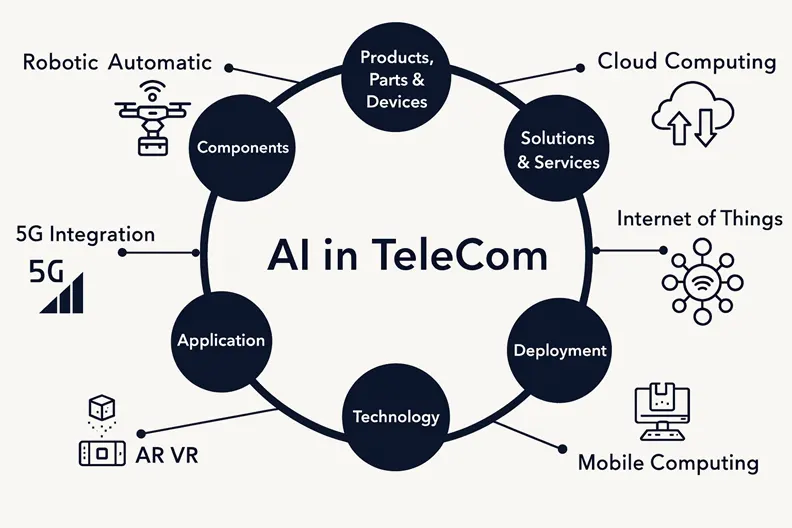
Telecommunication and data usage are skyrocketing, and so is the need to manage the infrastructure carrying these vital bits. AI systems are an integration of leading artificial intelligence technologies, such as machine learning, deep learning, generative AI, digital twins, natural language processing (NLP), and advanced analytics.
These systems help ensure the continuous operation of infrastructure, dodging telecom system downtime. AI systems optimize the performance of your telecom systems by managing and planning their capacity. It analyzes huge data sets in real-time to predict and resolve network issues before they snowball into major problems.
They automate routine network management tasks, including troubleshooting and monitoring network configuration changes. It’s a smart engine that primarily benefits the customer service segment via personalized and proactive solutions.
Also Read: Generative AI in Business
Why Should Telecom Operators Invest in Generative AI?
A business built on a solid network can never fall back. However, with all the evolution happening in terms of technological advancements, a one-dimensional approach cannot guarantee a win.
Adopting AI technologies can enhance resource allocation and predictive maintenance. The adoption is still in its early stages, and many companies are only currently experimenting. That said, it is never too soon to start, especially given the numerous benefits it can offer.
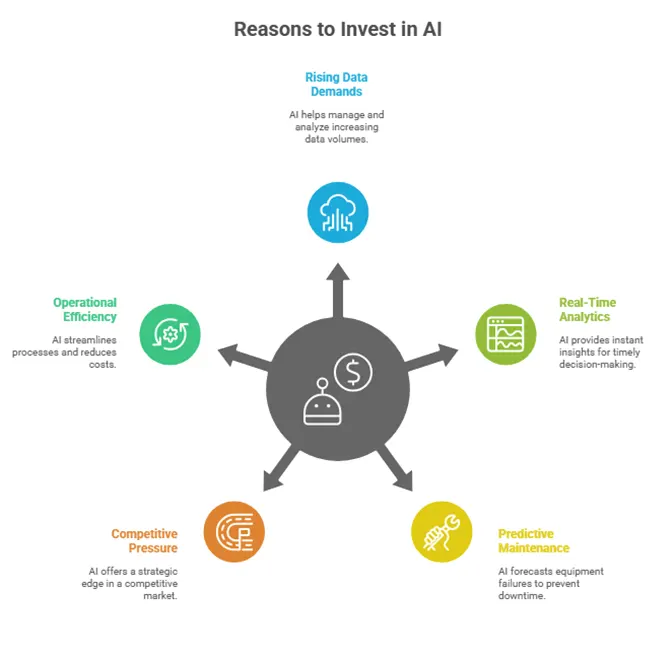
Here are a few reasons that you, as a telecom operator, should invest in AI.
Rising Data Demands
The last few years have witnessed an unprecedented and overwhelming surge of data from IoT, cloud services, 5G, and streaming channels. Traditional systems are not capable of keeping up with this surge.
On the contrary, AI-driven systems are smart and powerful. These systems analyze data in real-time to intelligently optimize network traffic, preventing congestion.
Growing Need for Real-Time Analytics & Predictive Maintenance
AI systems continuously analyze network data to forecast and prevent network failures before they become big. Predictive maintenance reduces costs related to emergency repairs and downtime, while also boosting customer satisfaction.
Also Read: Impact of AI in Logistics
Competitive Pressure
Customer experience is of utmost importance in the long haul. AI helps you have an upper hand here through hyper-personalization and smarter service. Predictive analytics and AI-powered chatbots anticipate customer needs and offer tailored solutions.
Operational Efficiency
AI automates various complex everyday tasks, such as fraud detection, customer needs, resource allocation, and network monitoring. It thus eliminates manual intervention for cost optimization.
We help you flawlessly integrate powerful generative AI models into your workflows for an instant boost to your productivity and accelerated time-to-market.

Generative AI Use Cases in Telecom
As per a TM Forum report, communications service providers (CSPs) have identified over 100 individual use cases for AI technology.
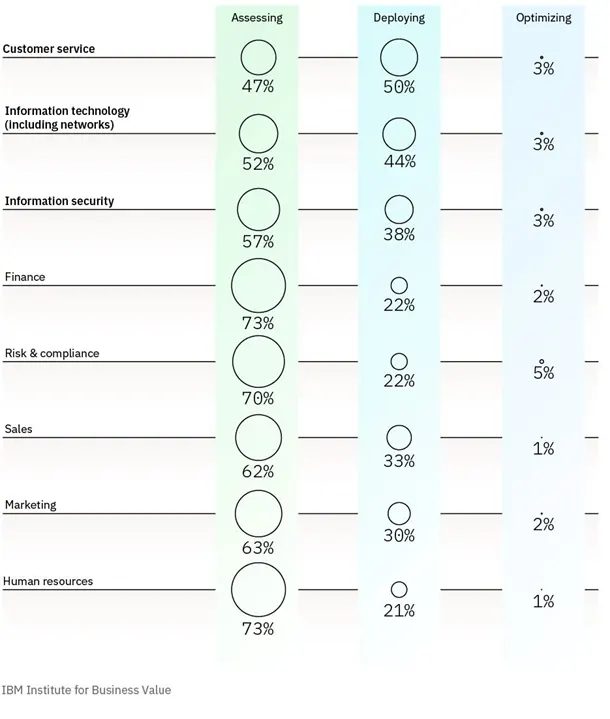
For many years now, the focus in the telecom sector has been on building faster and bigger networks. The recent data deluge, however, has represented industries with a reality check—the need for a smarter network.
AI is at the very core of this transformation, creating new opportunities and paths for growth and efficiency. You can use it in multiple ways, depending on your goals and business plan.
Read about some common, yet most powerful, AI use cases in telecom:
1. Network Optimization & Self-Healing Networks
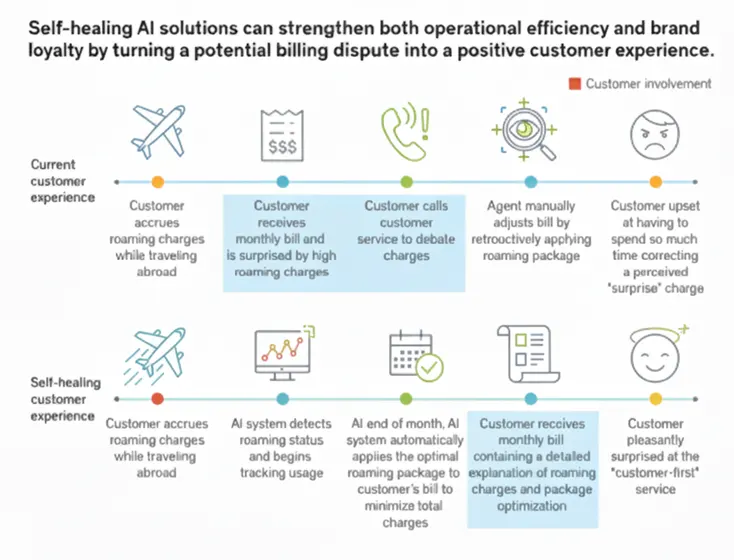
AI turns your network into a living system—one that doesn’t need human input. AI algorithms are always on the go, analyzing performance and traffic in real-time, dynamically optimizing bandwidth allocation accordingly.
Using AI, self-healing networks automatically detect and resolve issues without human intervention or guidance. Companies with such networks experience lower downtime, offering a more consistent user experience.
Verizon is utilizing advanced AI and machine learning techniques to optimize its network. The incorporation has significantly reduced outages, resulting in a more reliable and efficient service.
2. Customer Service & Chatbots
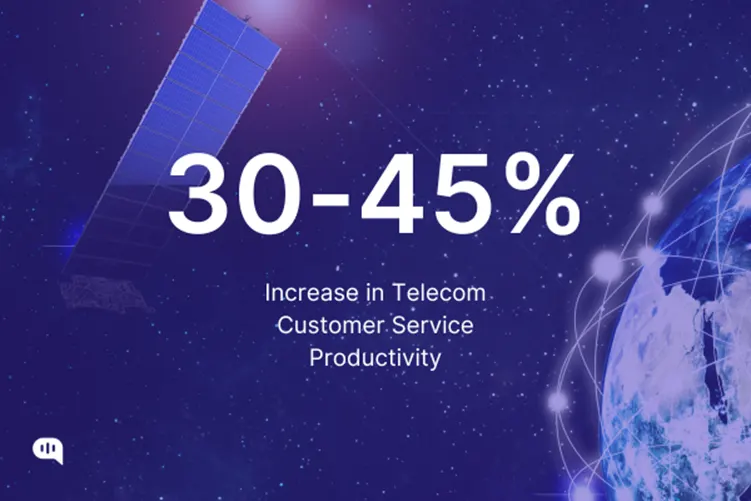
AI-powered virtual assistants and chatbots can provide your customers with an experience that lasts a lifetime. Such chatbots are programmed to handle common inquiries, ultimately reducing wait times with their 24/7 support.
They utilize natural language processing to comprehend customer sentiment and intent, enabling hyper-personalization. AI agents and assistants solve customer issues without needing a customer support representative.
Vodafone’s virtual agent, TOBi, takes advantage of generative AI to handle about 45 million customer calls each month, resolving approximately 70%.
3. Fraud Detection & Security
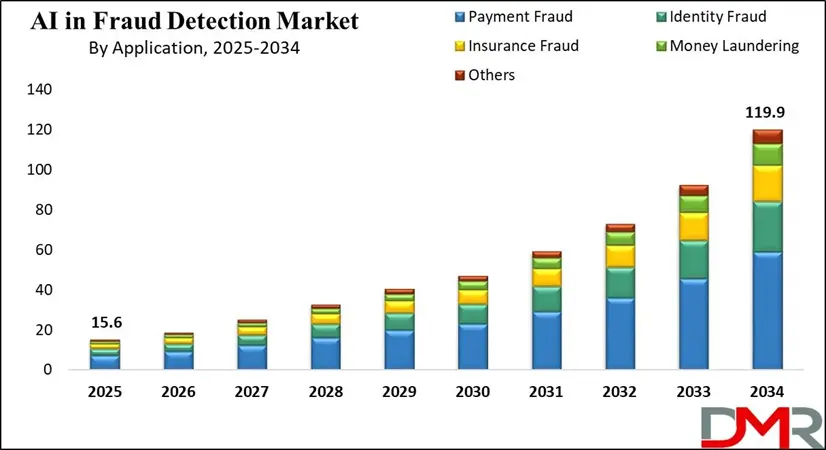
AI can be a powerful weapon against fraudulent activities. AI-powered fraud detection systems analyze gigantic data from usage and transactions. AI and ML algorithms identify suspicious patterns in your data in real-time, protecting both your company and your customers.
Ericsson has adopted AI-driven fraud prevention tools to analyse network data in real-time, helping them detect anomalies and predict potential fraud.
4. Business Intelligence & Revenue Growth
AI is the partner that will help you move beyond offering a simple service to drive business growth. AI-driven revenue management systems analyze huge quantities of data and identify revenue leaks, enabling you to make strategic decisions.
The ‘State of AI in Telecommunications’ report by NVIDIA found that 84% of global telecom companies reported revenue growth with AI adoption.
Also Read: The Role of Generative AI in Manufacturing
Challenges of Using Generative AI in the Telecom Sector
The telecom sector is on the brink of an AI revolution, by the is not a straightforward one. The span of challenges is almost as vast as its sea of opportunities, especially in terms of ethical compliance and deployment.
Here are the primary challenges of using AI in the telecom sector.
| Challenge | Impact on Telecom | Mitigation Strategy |
|---|---|---|
| Legacy Systems Integration | Inefficient network planning and slow deployment of new services. | Decouple new AI platforms from monolithic legacy systems by using microservices architecture and API Gateways. |
| Data Quality & Silos | Higher operational expenditures (OpEx) and inaccurate demand forecasting. | Using automated tools for cleaning, validating, and standardizing data. |
| AI Ethics & Trust | Discriminatory network access or biased network access. | Conducting regular bias audits on training data and models. |
| Organizational Resistance | Slow adoption of new automated processes. | Run focused change management programs. |
| Data Privacy & Security | Loss of customer trust and risk of regulatory fines. | Implement AI-powered security solutions and privacy-enhancing techniques. |
With Aegis Softtech's generative AI development services, you get custom-engineer secure Generative AI models.

Future of Generative AI in Telecom Industry
The telecommunication industry is striding towards implementing AI into its infrastructure strategies. Today, there are still a few challenges that stand between them and a complete digital transformation.
The future, however, is looking bright. AI has automated intricate tasks such as dynamic resource allocation and network slicing, simplifying the implementation of 5G networks. The technology is ushering this sector into the next era of communication technologies.
Here is what the future of AI in the telecom industry looks like:
1. Autonomous Networks
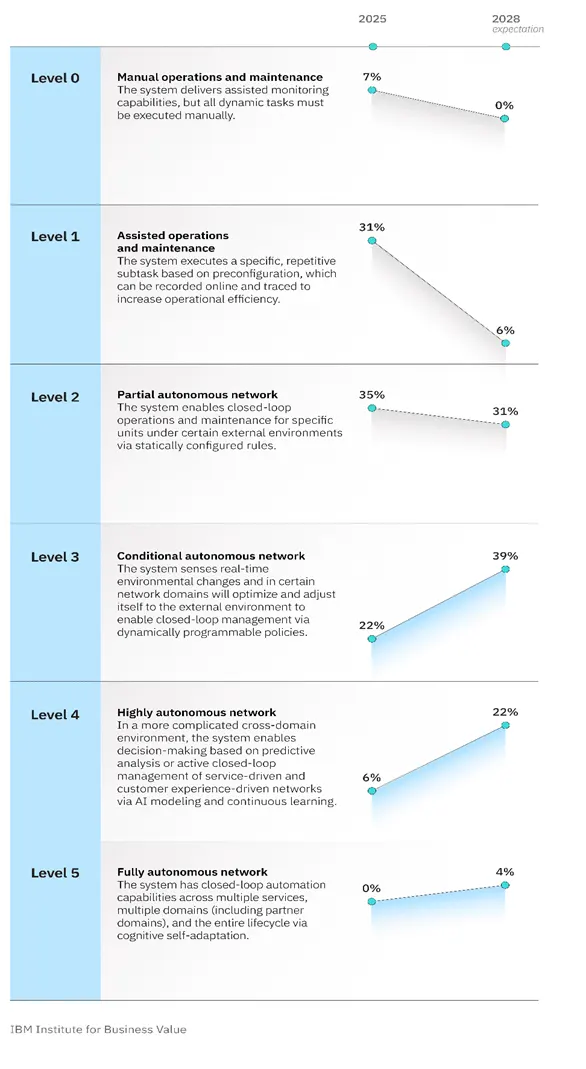
Autonomous systems are self-driving systems that can operate and optimize themselves with zero to minimal human intervention. In the near future, these AI-powered networks will continuously monitor network performance to predict and prevent outages before the problems can grow.
The shift towards a zero-touch paradigm is not far off, where operational costs will drastically reduce and service reliability will skyrocket. It’s an advanced operational model for networks that uses AI and ML to become self-healing, self-configuring, and self-optimizing.
According to an IBM study, 73% of network executives state that their organizations have curated clear roadmaps, transitioning from basic automation to autonomous operations.
2. AI-driven Edge Computing & IoT Integration
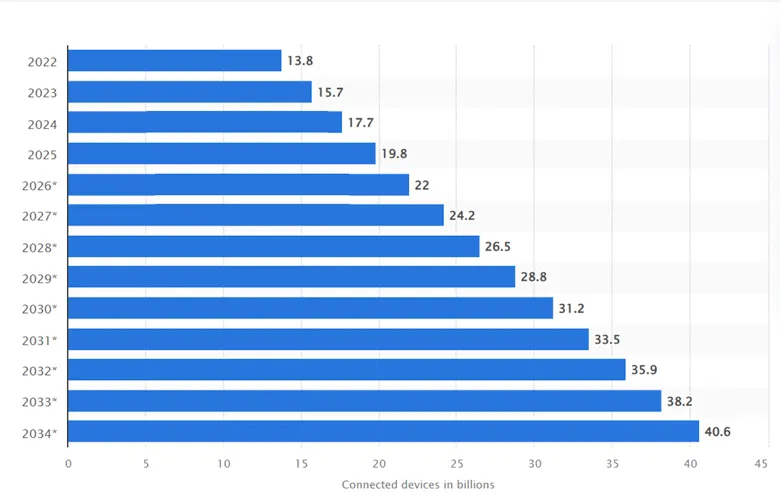
5G and the Internet of Things (IoT) have both witnessed explosive growth in the past few years, creating massive data at the network’s edge. The future involves the movement of AI to the edge for real-time data processing and immediate decision-making.
Companies that begin AI incorporation today are certain to offer high-value service beyond mere connectivity soon.
By 2034, the number of IoT devices worldwide is projected to be more than 40.6 billion, nudging the need for AI at the edge.
3. 6G Development
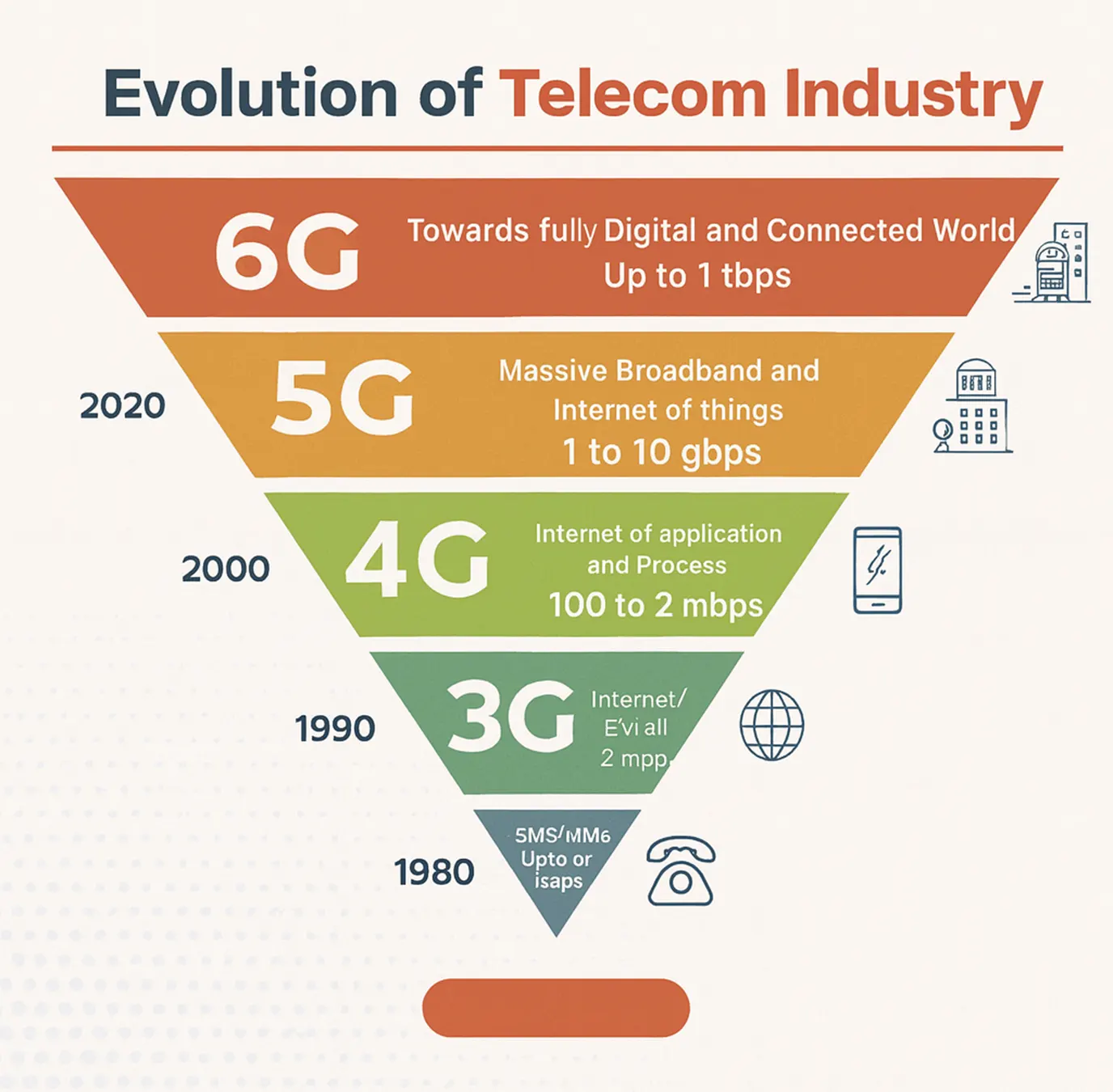
Designed to be AI-native, 6G is the upcoming generation of wireless technology. It will be embedded directly into the network architecture, enabling the network to be highly efficient and dynamic.
In the coming years, AI will steer dynamic spectrum management. It will optimize the way frequencies are used to maximize performance, ensuring 6G can enable new applications, including real-time immersive experiences and holographic communication.
The first commercial 6G systems are expected to grace the market by 2030. While not from day one, it is forecast to support a myriad of new and advanced cyber-physical interactions.
4. Generative AI for Enhanced Operations
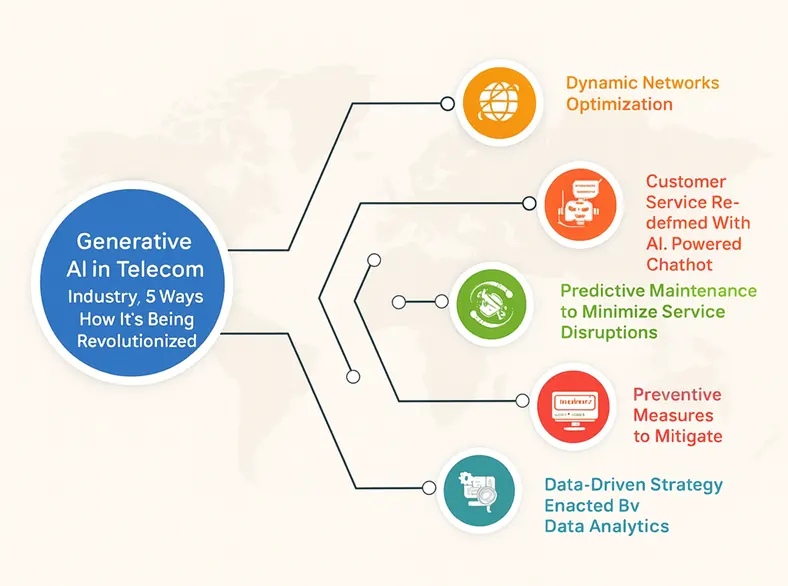
You can build a smart business with generative AI, since it doesn’t analyze existing data but actively generates new operational blueprints and insights. In short, it accelerates development cycles and networking planning, shortening the period from months to mere days.
Generative AI in the telecom industry is also a boon for customer service and marketing. It generates highly personalized campaigns and ad copies by predicting customer needs.
The global generative AI in telecom market size is forecast to reach around USD 9.79 billion by 2034.
Revolutionize Telecom with Generative AI Solutions from Aegis Softtech
AI is what differentiates between outdated operations and future-ready networks. It’s the one technology that is redefining how you reduce costs while scaling. In fact, its adoption is no longer an option. To succeed, you must step on the boat.
The more important question is how fast you can move to capture its advantages.
Aegis Softtech steps in here to make a difference and help you lead.
We don’t offer cookie-cutter AI deployments. Instead, we get into the depths of the specific challenges that your company is facing.
Our team of skilled AI developers understands your goals and the challenges that lie in your path. We then create AI solutions that work within the realities of your infrastructure.
We ensure you are not just adopting AI, but integrating it in a way that delivers tangible, long-term business value.

Frequently Asked Questions
AI in the telecom industry analyzes vast network data to optimize networks, automate operations, enhance customer experiences, improve security, and automatically reroute traffic.
In the telecom industry, GenAI is creating and analyzing huge data quantities to optimize network operations, streamline business processes, and personalize customer experiences. It generates new content, including network insights and personalized marketing materials to improve customer service and automate tasks.
Airtel and Reliance Jio are the two Indian telecoms using AI-based networks in different ways to manage their operations and services.