
Snowflake Services That Drive Real Business Outcomes
We build, engineer, and operate Snowflake environments for mid-market and enterprise teams. So your data platform performs in production, not just in demos. Trusted by mid-market and enterprise teams as a reliable Snowflake development company since 2008.

Hire Certified Experts
Projects Delivered
Snowflake Certified Engineers
Years Data Engineering













Your Data Platform Has More in It. We Help You Get It Out.
Most Snowflake environments underperform, not because the platform is wrong, but because the pipelines were rushed, the warehouses were never right-sized, and governance was an afterthought. Aegis Softtech fixes that. Our Snowflake cloud services cover everything from architecture design to day-two operations. We engineer Snowflake environments built for real workloads: concurrent users, growing data volumes, compliance requirements, and BI tools that have to be fast.
Whether you're starting fresh, migrating a legacy warehouse, or inheriting an environment that's costing more than it should, we scope the right engagement and deliver against measurable outcomes.
What Is Snowflake?
Snowflake is a fully managed, cloud-native data platform. This is built for the cloud from scratch, not migrated from legacy infrastructure. Founded in 2012, it runs on AWS, Azure, and GCP and is trusted by 9,000+ organizations globally.
Unlike traditional databases, Snowflake completely separates compute and storage. Data is stored once, yet multiple independent compute clusters can query it simultaneously. This makes Snowflake development services highly scalable and efficient.
It brings data warehousing, data lakes, data engineering, data science, and data applications together on a single platform.

How Snowflake Works?
Snowflake works with three independent layers:

Storage Layer
Data stored in columnar format, compressed and encrypted, organized into micro-partitions (50–500MB). Storage is billed separately from compute; idle warehouses don't incur compute costs.
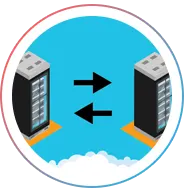
Compute Layer (Virtual Warehouses)
Independent compute clusters that spin up, resize, and shut down on demand. Multiple warehouses query the same data simultaneously without competing for resources. Billed per second. Auto-suspends when idle.

Cloud Services Layer
Handles authentication, access control, query optimization, and metadata management. Automatically rewrites queries and manages execution plans; no manual indexing or vacuuming required.

Data Sharing
Share live, governed data with external partners with no copying, no ETL, no replication lag. Recipients query your data in real time. Powers the Snowflake Data Marketplace.
This architecture is what makes our Snowflake data engineering services predictable to scale and cost-efficient to operate. Choosing the right architecture for your workload is where most teams get it wrong. Our Snowflake Consulting practice exists specifically to get that decision right before a line of code is written.
Key Features of Snowflake
These Snowflake features are what separate it from every legacy warehouse and what we configure precisely for your environment.
| Feature | What It Does |
|---|---|
| Separation of Storage & Compute | Store data once, query with unlimited independent compute clusters — scale either up or down without affecting the other |
| Multi-Cluster Virtual Warehouses | Auto-scales out during peak demand, scales back when load drops — concurrency problems eliminated without manual intervention |
| Zero-Copy Cloning | Clone any database, schema, or table instantly with no storage duplication — dev and test environments provisioned in seconds |
| Time Travel | Query data as it existed up to 90 days ago — recover dropped tables, compare historical snapshots, no backup infrastructure needed |
| Snowpipe | Continuous, event-driven ingestion as files arrive in cloud storage — data queryable within seconds, no batch jobs or scheduled loads |
| Snowpark | Write Python, Java, or Scala that executes natively inside Snowflake — ML training and transformations run where the data already lives |
| Cortex AI | LLM-powered summarization, sentiment analysis, classification, and translation — natively inside Snowflake's security perimeter, no external API calls |
| Snowflake Horizon | Unified governance across all clouds — data classification, access controls, lineage tracking, data clean rooms, and compliance tooling in one console |
| Data Marketplace | Discover, subscribe to, and publish live data products — financial data, weather, demographics — without ETL or replication |
| Native Application Framework | Build and distribute data apps inside customers' Snowflake environments — full security and governance, no data sharing required |
Benefits of Using Snowflake
These Snowflake benefits compound over time — especially when the environment is engineered correctly from day one.
No infrastructure to manage
Fully managed platform; your team focuses on data, not servers
Elastic scaling without downtime
Scale compute up in seconds for peak load, back down immediately after, pay only for what you use
True concurrency
BI, ML, and engineering workloads run simultaneously on separate warehouses without competing
Lower TCO
Per-second billing and compute/storage separation mean you stop paying for idle peak capacity
Security and compliance by default
SOC 2 Type II, HIPAA, PCI-DSS, FedRAMP, GDPR are encrypted at rest and in transit out of the box
Cross-cloud data sharing
Share live data across AWS, Azure, and GCP with no copying or pipelines
Faster time to insight
Zero-copy cloning, continuous ingestion, and instant provisioning cut setup from months to days

Snowflake Use Cases
Consolidate data from ERP, CRM, marketing, finance, and operational systems into a single governed warehouse. Replace on-premises Netezza, Oracle environments, or Teradata to Snowflake, a cloud-native platform that scales without the hardware refresh cycle.
Continuous ingestion via Snowpipe and Kafka enables analytics on data that's minutes — not hours — old. BI dashboards reflect current operational reality rather than last night's batch load.
Snowflake natively supports semi-structured data (JSON, Avro, Parquet, ORC, XML) alongside structured data, all queried with standard SQL. With Apache Iceberg support, Snowflake functions as a governed lakehouse without the operational complexity of managing open-source lakehouse infrastructure.
Data science teams build feature engineering pipelines and train models natively in Snowflake using Snowpark — with access to governed, production-quality data from day one. Eliminates the feature pipeline duplication that slows ML delivery in most organizations.
Share live datasets with customers, partners, or regulators without copying data or building APIs. Organizations are increasingly using Snowflake's Data Marketplace to monetize proprietary data assets as governed data products.
Unify customer data from CRM, e-commerce, CDP, marketing automation, and support platforms into a single Snowflake environment. Power real-time personalization engines, churn models, and CLV analytics at enterprise scale.
Financial services firms use Snowflake for Basel III, IFRS 9, and AML reporting. Healthcare organizations use it for HIPAA-compliant patient data platforms. Snowflake's audit logging, data lineage, and access control capabilities satisfy the evidence requirements that regulators demand.
Ingest security telemetry — logs, events, network flows, threat feeds — at scale into Snowflake. Run threat hunting queries, SIEM aggregation, and compliance reporting on infrastructure that handles the volume and concurrency that security data generates.
Ready to put these to work? Explore our Snowflake Implementation process — from scoping to go-live.
Common Snowflake Challenges
Even well-architected Snowflake environments run into predictable problems. These are the ones we see most often — and what actually fixes them.
Credit spend is growing without a clear cause.
The symptom is a climbing monthly bill with no corresponding growth in data or users. The cause is almost always one of three things: warehouses not auto-suspending, workloads that grew without warehouse resizing, or a handful of expensive queries running repeatedly without optimization. A credit consumption audit identifies which, and the fix is targeted, not a blanket environment rebuild.
Query performance is degrading as data volumes grow.
New data being loaded without updating clustering keys is the most common culprit. As tables grow beyond a few hundred gigabytes, micro-partition pruning becomes critical. Without clustering, Snowflake scans more data than necessary on every query. The fix is a clustering key strategy, not a warehouse upgrade.
Migrations take far longer than scoped.
Manual SQL translation from Teradata or Oracle stored procedures surfaces complexity that wasn't visible during scoping. Undocumented dependencies between objects emerge mid-migration. AI-powered tools like SnowConvert reduce the manual translation burden significantly, but they require a parallel validation environment and a structured cutover plan to work reliably. See our Snowflake migration approach.
Data governance doesn't keep pace with team growth.
RBAC that was designed for 10 users breaks down at 100. PII that wasn't classified at ingestion becomes a compliance liability when an audit arrives. Governance frameworks need to be designed for where your organization will be in two years — not where it is today.
Analytics teams don't trust the data.
Inconsistent metric definitions, pipelines that silently fail, and schema changes that break downstream reports all erode analyst confidence. The fix is a combination of semantic layer design (consistent metric definitions in one place), automated data quality tests on every pipeline run, and data contracts that enforce schema stability between producers and consumers.
Snowpark and AI workloads aren't performing as expected.
Most AI performance issues in Snowflake trace back to data that wasn't cleaned and governed before the model was built, or feature pipelines that weren't designed for the query patterns ML inference requires. The platform is capable — the data foundation under it usually isn't.
Our Team



Other Big Data & Analytics Services
Top Services
Trending Services


FAQs
Architecture, migration, implementation, data warehouse engineering, performance optimization, governance, DevOps setup, AI/ML pipeline development, and managed operations. For strategic advisory and roadmap planning.
Traditional warehouses couple storage and compute — you pay for peak capacity, scaling requires downtime, and concurrent workloads compete for resources. Snowflake separates them: scales in seconds, no downtime, independent warehouses per workload.
Yes — credit audit → query profiling → warehouse right-sizing → clustering keys → auto-suspend tuning → cost attribution dashboard your team owns going forward.
Storage billed per TB/month; compute billed per second of virtual warehouse use. Pricing varies by cloud provider, region, and edition (Standard, Enterprise, Business Critical). The right architecture significantly affects the bill.
Snowpark is Snowflake's developer framework that brings code to your data. Our Snowflake developers use Python, Java, and Scala to build data transformations, ML pipelines, and application logic that runs natively inside Snowflake. No data movement. No external compute. No infrastructure overhead.
Snowflake Cortex AI is the built-in intelligence layer that brings AI capabilities directly inside your Snowflake environment. It enables document summarization, sentiment analysis, classification, and translation. These all run natively, without external API calls or your data ever leaving your security perimeter.
Yes. Snowpipe delivers continuous event-driven ingestion with data queryable within seconds of arrival. Combined with the Kafka connector, near-real-time analytics run without a separate streaming infrastructure.
Snowflake holds compliance certificates such as SOC 2 Type II, HIPAA, PCI-DSS, ISO 27001, FedRAMP (GovCloud), and GDPR. The availability depends on the edition and cloud region.