

Anyone building or maintaining extensions in AL knows the frustration: you fix some code, publish it, and Visual Studio (VS) Code still clings to an old state. The extension doesn’t refresh, your changes don’t show, and restarting the whole editor feels like overkill.
Learning how to reload extensions in VS Code solves that problem neatly. This means you can refresh extensions on demand and keep development moving. For Microsoft Dynamics 365 Business Central projects, that means quicker iterations, fewer interruptions, and a smoother path from code edits to testing.
This guide walks you through the steps to reload extensions efficiently and highlights why it matters in AL development. Read on to understand how the Dynamics Business Central VS Code extension reload works.
Key Takeaways
- Clear stale errors, refresh missing objects, and ensure pulled changes show up instantly.
- Run Reload Window for UI/extension refreshes or Developer: Restart Extension Host for deeper resets.
- Install the Reload Button (natqe.reload) extension for one-click reloads from the status bar.
Why Reloading Extensions Matters in BC Development
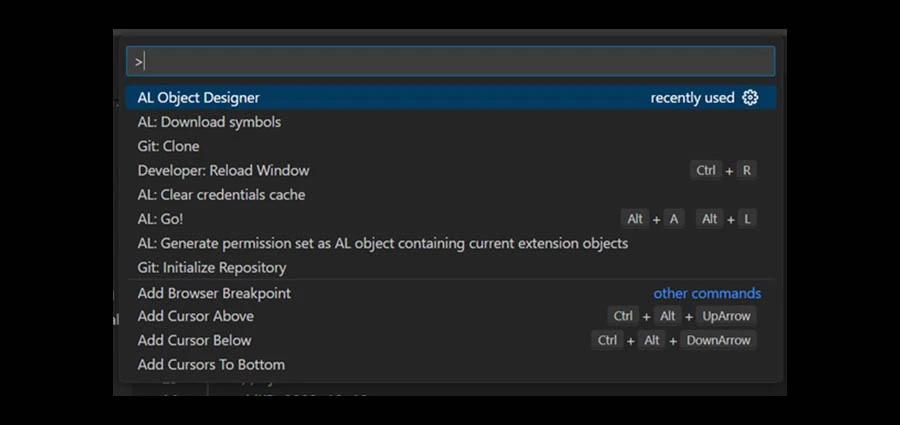
Here are the most common reasons a reload extension in VS Code Business Central workflow matters:
- Pulled changes don’t appear: After syncing from source control, new objects or modifications may not show until you reload.
- Stale compilation errors remain: Errors sometimes linger even after fixing code, and reloading clears them instantly.
- Objects vanish after updates: Pages, tables, or reports may disappear from view until a refresh resolves the mismatch.
- Full restart slows you down: Using the VS Code Reload Window command refreshes extensions without losing your place, unlike closing and reopening the editor.
Built-in VS Code Methods To Reload Extension
Reloading an extension in VS Code need not require closing everything down. The editor offers built-in commands that refresh the workspace or restart parts of the extension engine.
Use these methods when updates don’t immediately reflect, or to clear stale errors:
Using Command Palette → Reload Window
When you want a quick refresh of UI state and extension activation, this method often suffices:
- Open the Command Palette via Ctrl + Shift + P
- Type “Reload Window” and hit Enter (this invokes the workbench.action.reloadWindow command)
VS Code reloads the window, restarting all extensions and updating the UI. This is typically enough when your extension changes involve UI or minor logic tweaks.
Developer: Restart Extension Host (For Extension Authors)
In cases where more than a UI refresh is needed, like internal state, background services, or deep extension logic, you should restart the extension host:
- Use the Developer: Restart Extension Host command from the palette (F1 or Ctrl + Shift + P)
- This stops and restarts just the extension host, not the entire window
- Apply this when you change activation logic, background tasks, or internal service layers
This option gives a deeper refresh than the VS Code Reload Window command, but with less disruption than closing the entire editor. In a Business Central AL code development workflow, knowing when to use each method makes rebuilding and testing faster and smoother.
Using a Dedicated “Reload” Extension
Built-in commands in VS Code work well, but many developers prefer having a quicker option always visible. A dedicated reload extension adds that convenience by placing a button directly in the editor, making refreshes a single click away.
Installing the Reload Button Extension

One of the most widely used tools is the Reload Button (natqe.reload), available on the Visual Studio Marketplace. It enhances the editor by adding a reload icon in the status bar at the bottom of VS Code. To set it up:
- Open the Extensions view (Ctrl + Shift + X)
- Search for Reload (natqe.reload)
- Select Install and then reload your VS Code session once to activate the feature
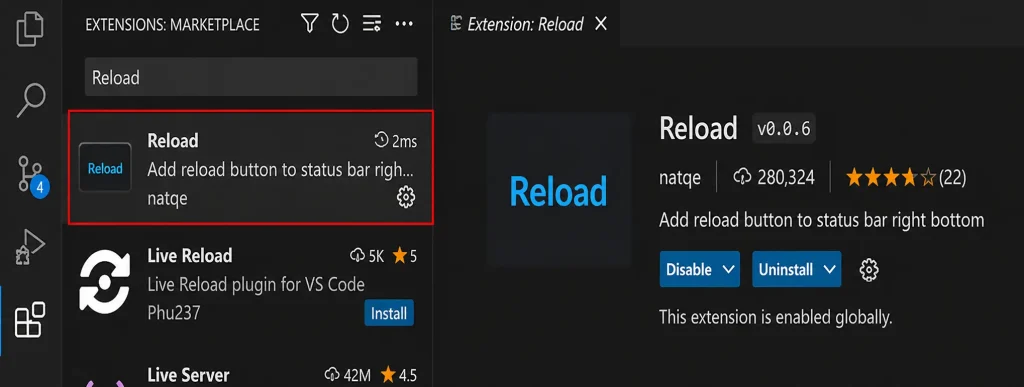
After installation, the reload icon becomes part of your everyday workflow and stays in reach at all times.
Workflow With One-Click Reload
The reload button makes refreshing your workspace seamless:
- Make changes to an AL object, table, or page customization in Business Central
- Click the reload icon in the status bar to trigger a session reload
- Your workspace refreshes, extensions restart, and your open files remain untouched
Many developers prefer this method over manually running the VS Code Reload Window command, as it minimizes clicks and keeps their focus on coding.
Best Practices for Extension Reload in BC Projects
A smooth reload in Business Central depends on how you prepare your setup and confirm changes after the reload. Here are a few best practices that keep your workflow reliable.
Keep Your Tools Current
VS Code gets frequent updates, and so do extensions like AL Language. Outdated tooling often causes unexpected reload failures, missing symbols, or performance slowdowns when working with large BC projects.
Before starting development, check that you’re running a supported VS Code version and compatible add-ons. This small step prevents reload hiccups and ensures your developer workflow benefits from the latest improvements.
Match AL Extension to Your BC Version
Business Central updates introduce new object types and properties, which the AL Language extension must recognize. If your extension version doesn’t match the Business Central version you’re targeting, reloaded objects may fail to compile or won’t appear in IntelliSense.
Microsoft publishes version-specific AL extensions, so always install the one aligned with your BC tenant. Treat this as a non-negotiable part of the setup to avoid subtle reload errors.
Separate Workspace and Global Settings
When working across multiple BC projects, global settings can unintentionally override project-specific configurations. This often shows up after reloading as incorrect symbols or misapplied formatting rules.
Instead, rely on workspace settings for things tied to a single project, such as compiler paths or schema references. Keeping global settings clean and minimal ensures predictable reloads, no matter how many environments you switch between.
Verify Changes in a Sandbox Environment
A successful reload doesn’t guarantee your objects behave correctly in Business Central.
After refreshing, push changes to a sandbox tenant and verify that the objects appear in the client, compile without errors, and run with the expected behavior. This step acts as a safeguard before promoting updates to production.
Skipping sandbox testing risks introducing broken objects that only show issues after end users are impacted.
Stay Efficient With Extension Reloads in VS Code
Knowing how to reload extensions in VS Code efficiently is a small detail that makes a big difference in BC development. It cuts down wasted time, keeps your AL objects aligned with the client, and ensures your team can focus on building.
At Aegis Softtech, we specialize in optimizing Business Central development workflows.
Our Business Central Consultant assists with extension management, AL coding best practices, and configuring VS Code for maximum efficiency. We help Business Central developers and technical teams implement reliable reload strategies, maintain consistent environments, and reduce errors during upgrades or deployments.
FAQs
1. When do I need to reload an extension instead of restarting VS Code?
Reloading an extension is useful when you’ve updated AL objects, pages, or tables and want the changes reflected immediately. It saves time compared to restarting VS Code, especially when the update doesn’t affect the editor itself but requires a refreshed extension host.
2. How to use the “Reload Window” command in VS Code for BC extension updates?
Open the Command Palette with Ctrl + Shift + P, type ‘Reload Window’, and press Enter. This refreshes all extensions, reloads your workspace, and ensures that changes to AL objects or extensions are applied without closing the editor.
3. Are there VS Code extensions that simplify reloading extension development projects?
Yes. The Reload Button extension (natqe.reload) adds a status bar button for one-click reloads. It triggers a Dynamics Business Central VS Code extension reload quickly, allowing developers to refresh their workspace after AL changes without navigating menus or restarting the editor.
4. Does reloading the extension affect AL Language or other BC tools?
Reloading primarily restarts the extension host, so AL Language and other BC extensions refresh alongside it. It does not remove your settings or break workspace configurations, but it ensures all tools reflect the latest code and object changes in your project.